
Bruce Goldsmith's paragliding companies have always seemed to me like one-man shows. Unlike many others, Bruce has always been ready for bold experiments, whatever his business partners and potential pilot customers might expect from him. Sometimes the experiments worked out, sometimes -- not so much. Today's hero looks openly experimental too. But don't rush to judge it by its looks -- a lot of surprises lie ahead!
Construction
Canopy
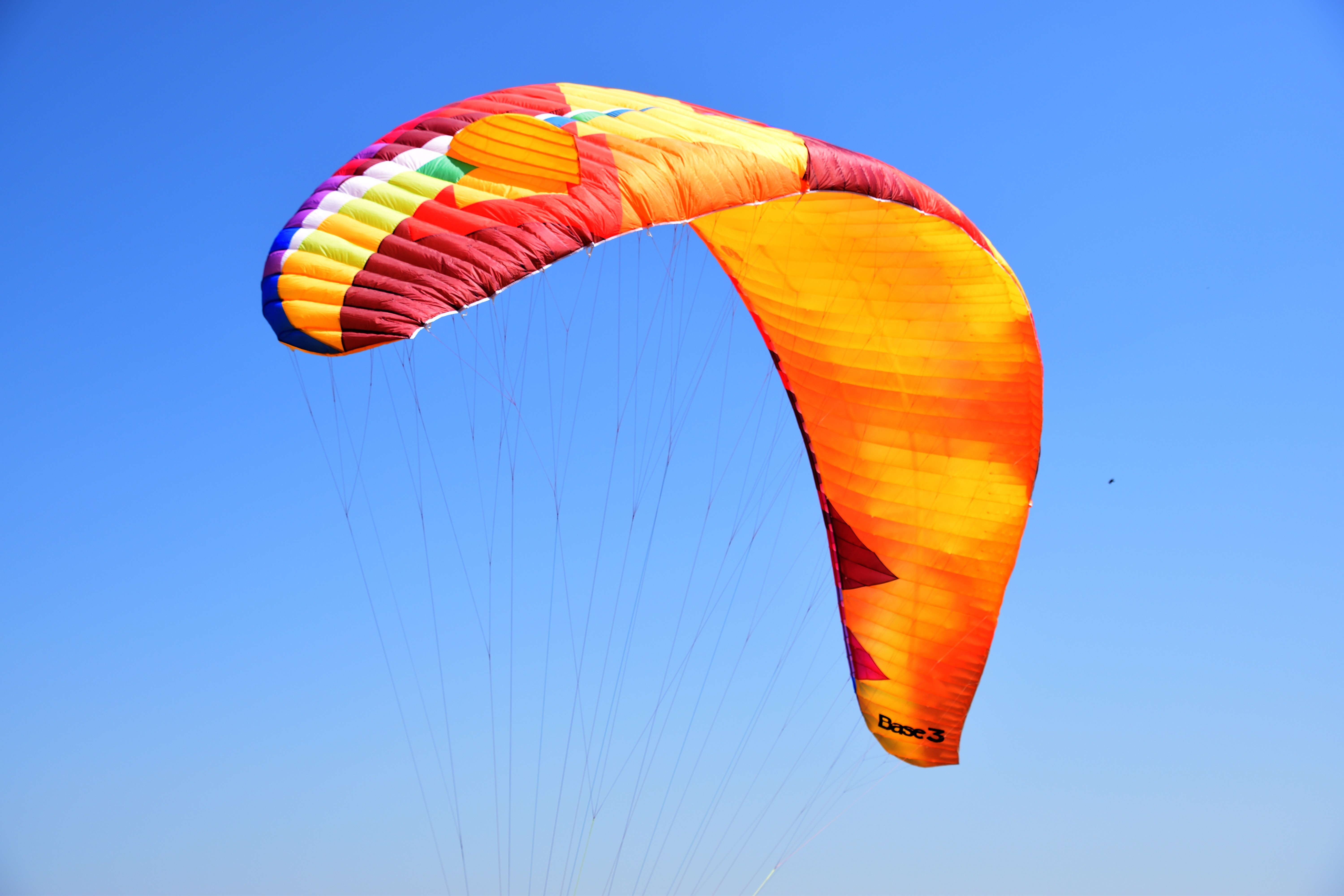
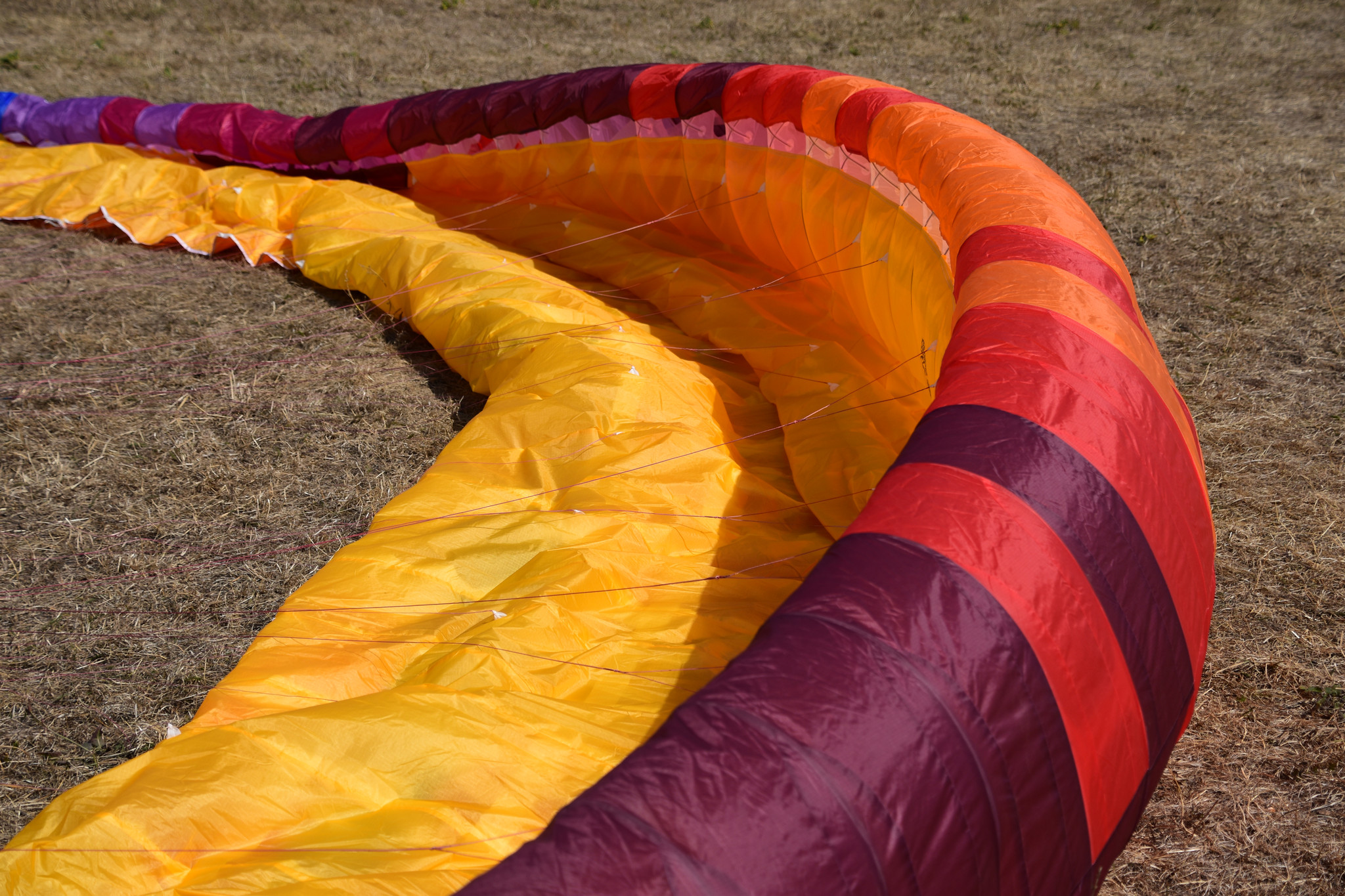
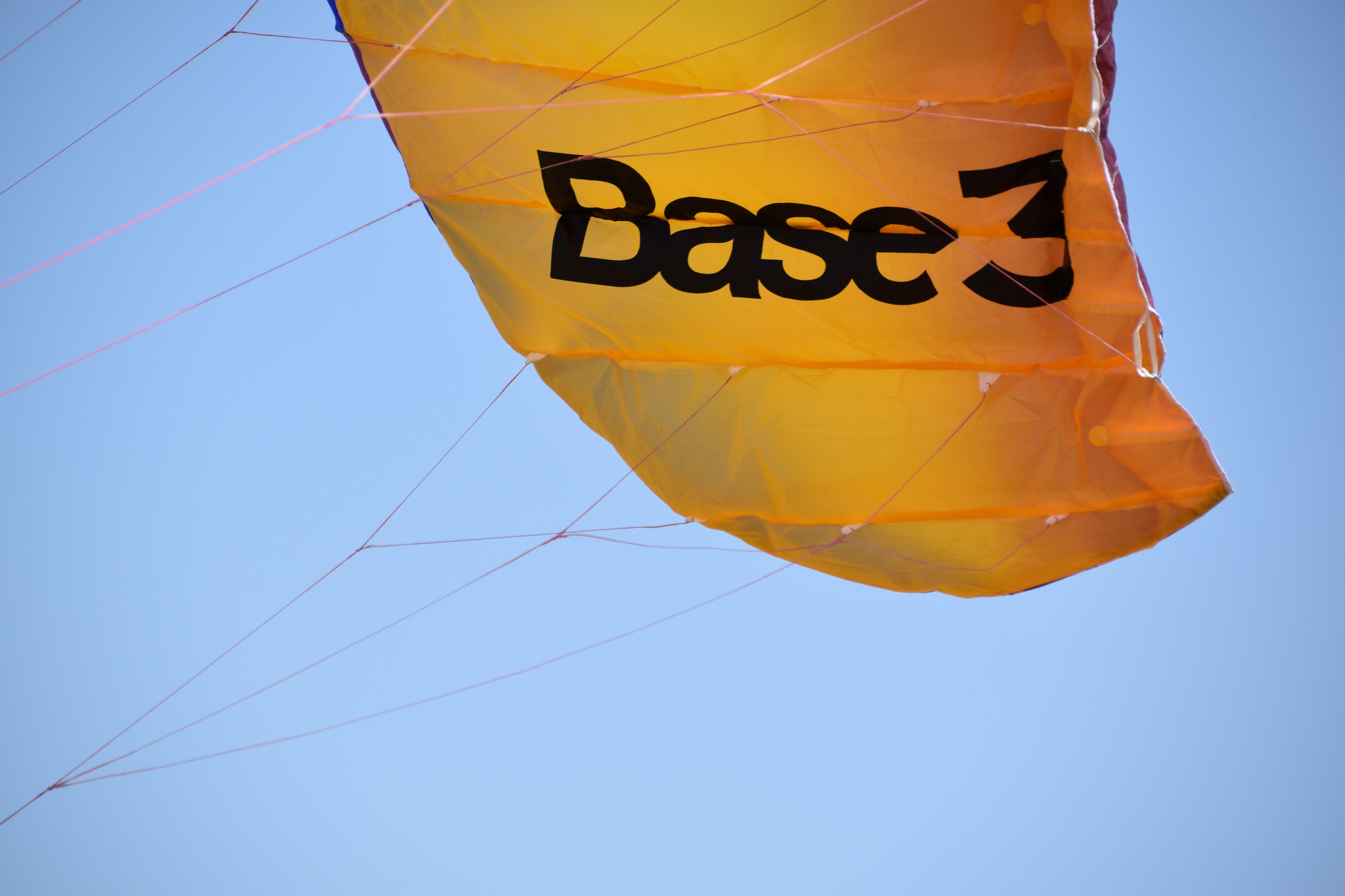
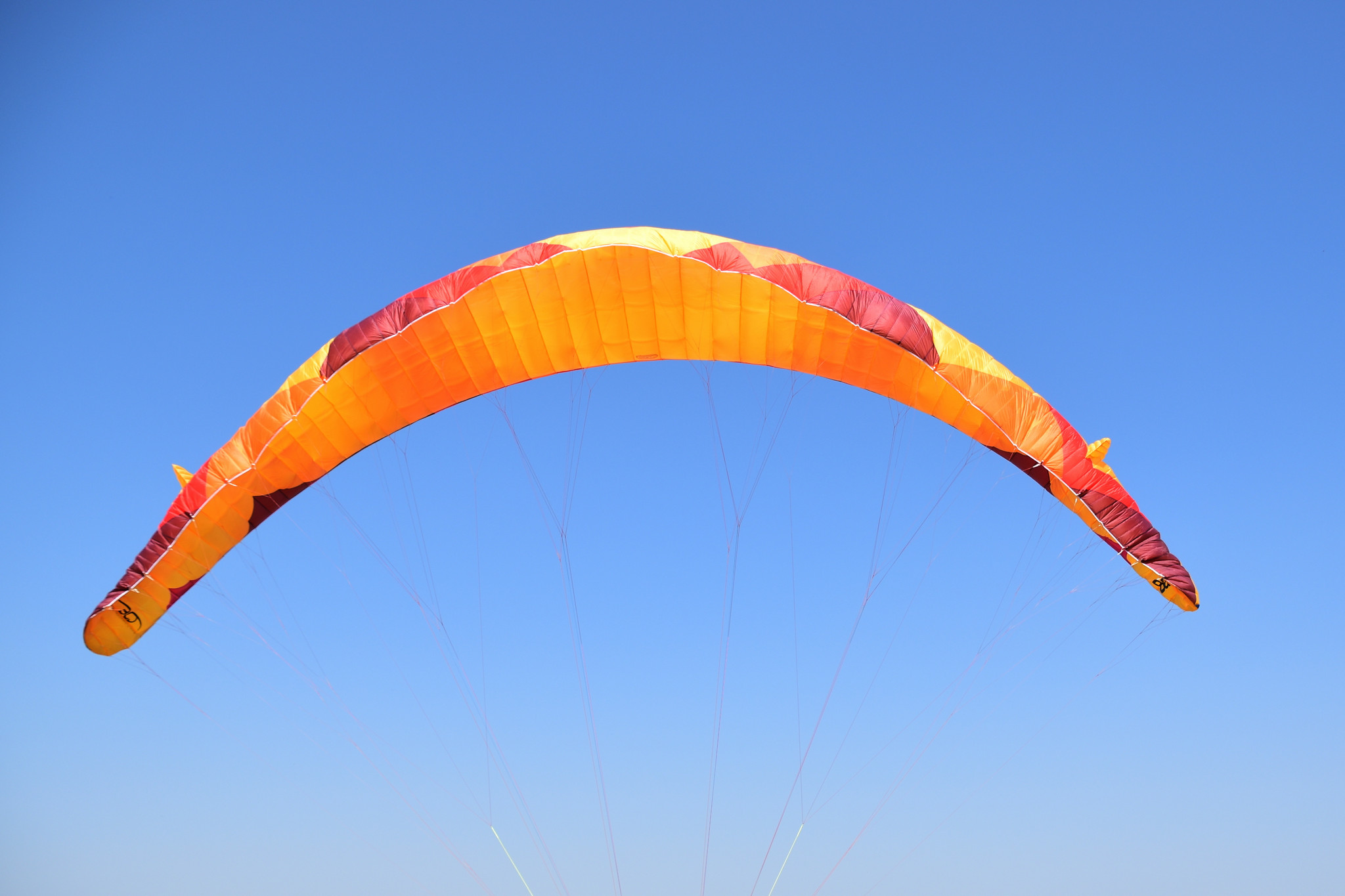
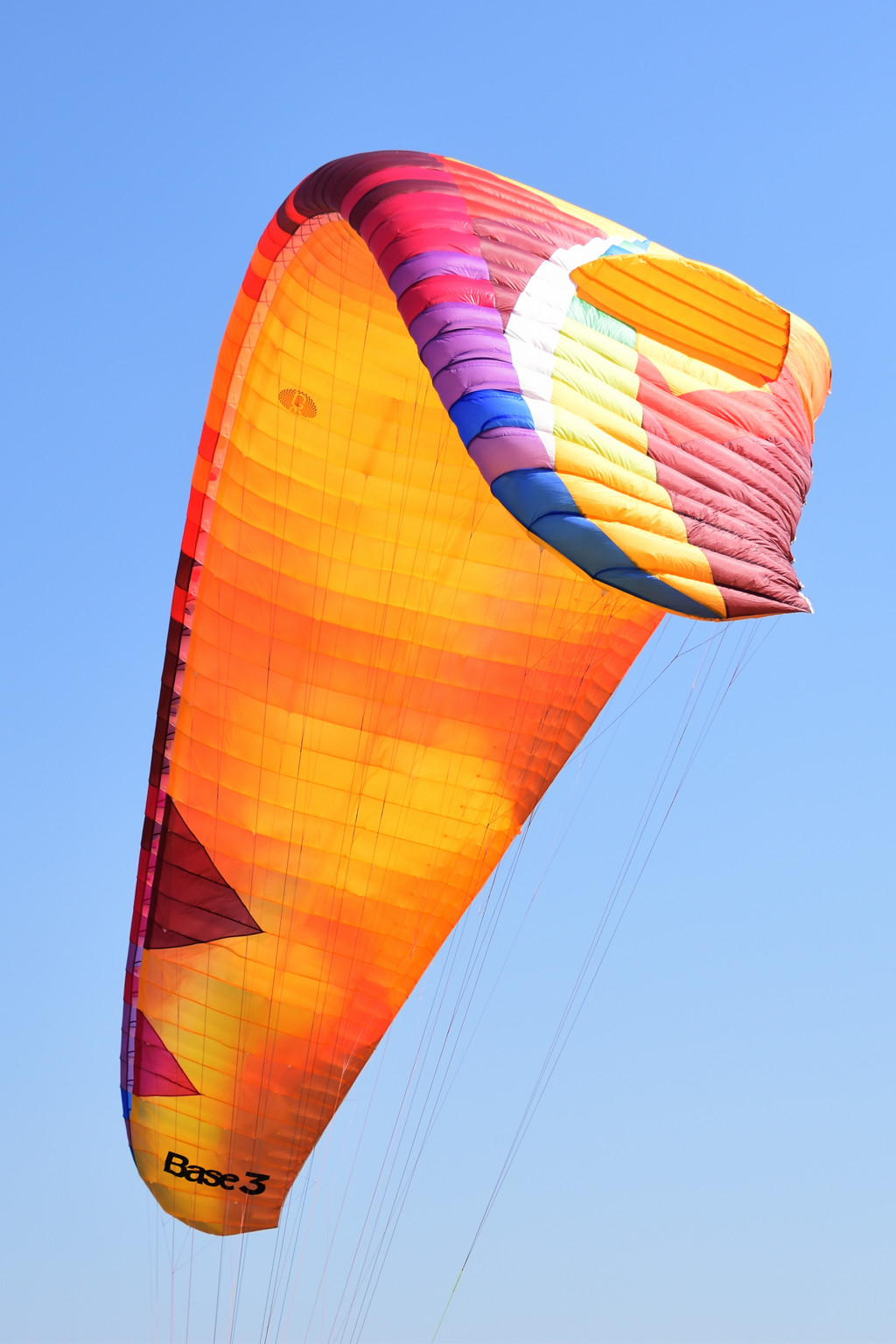
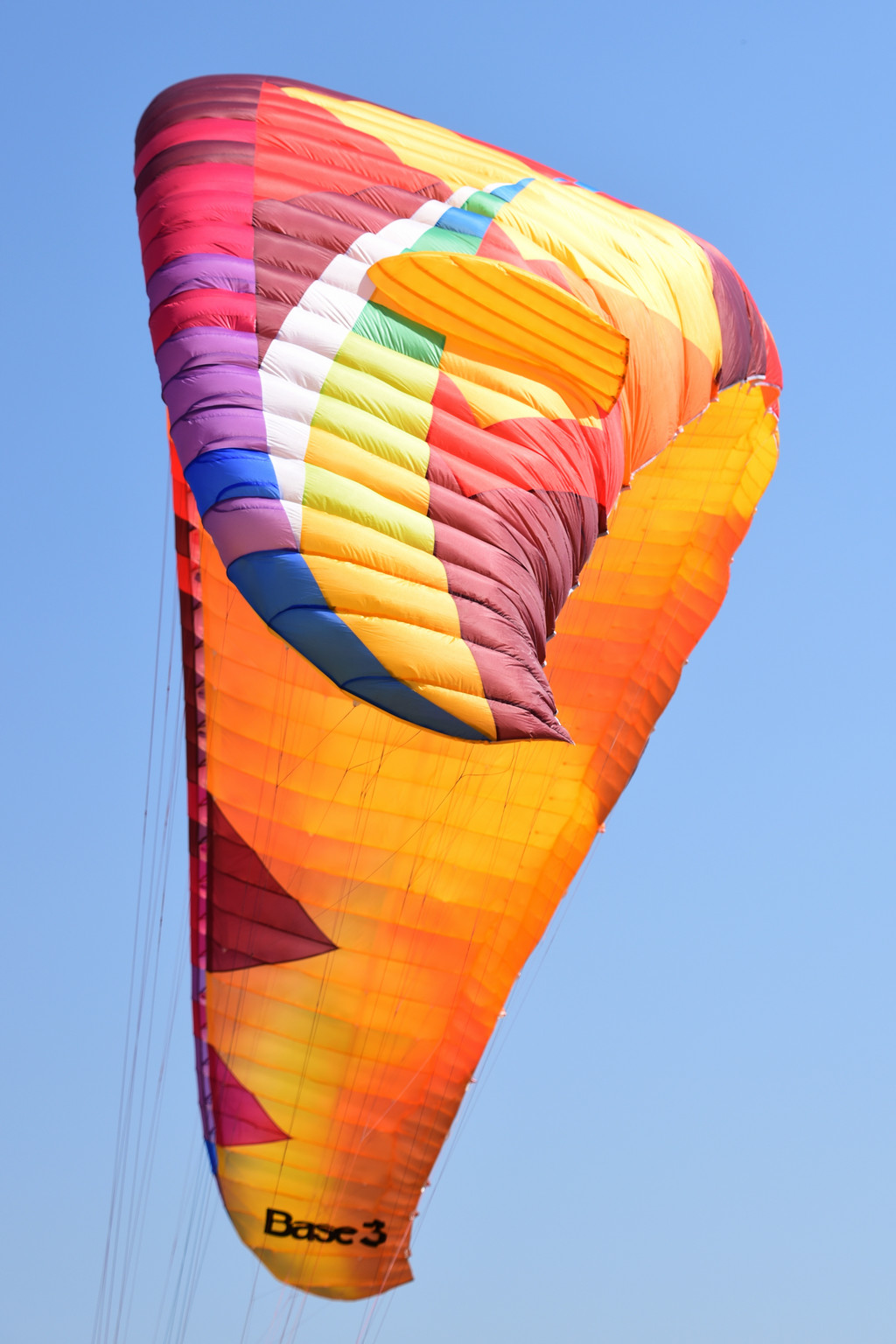
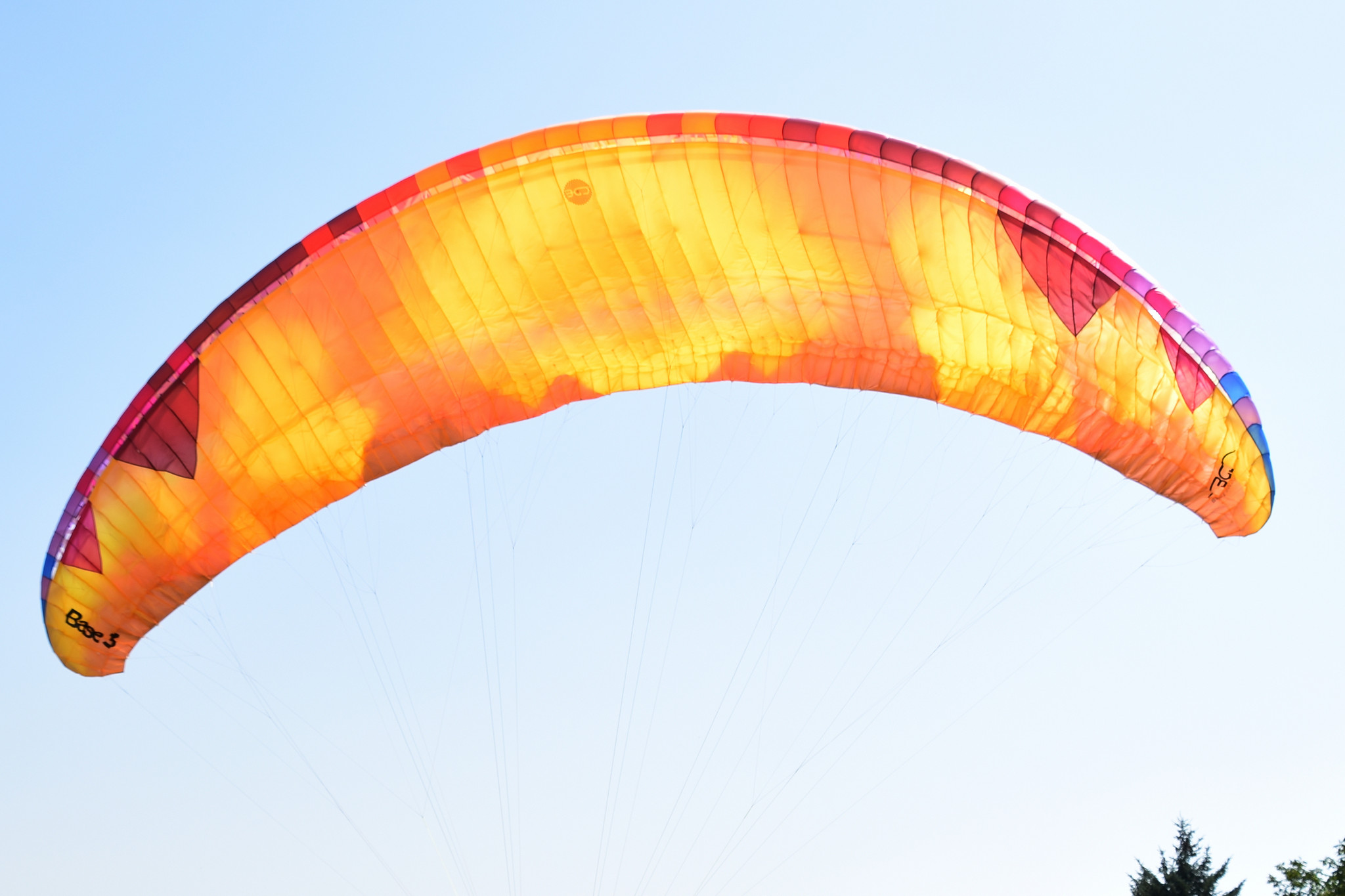
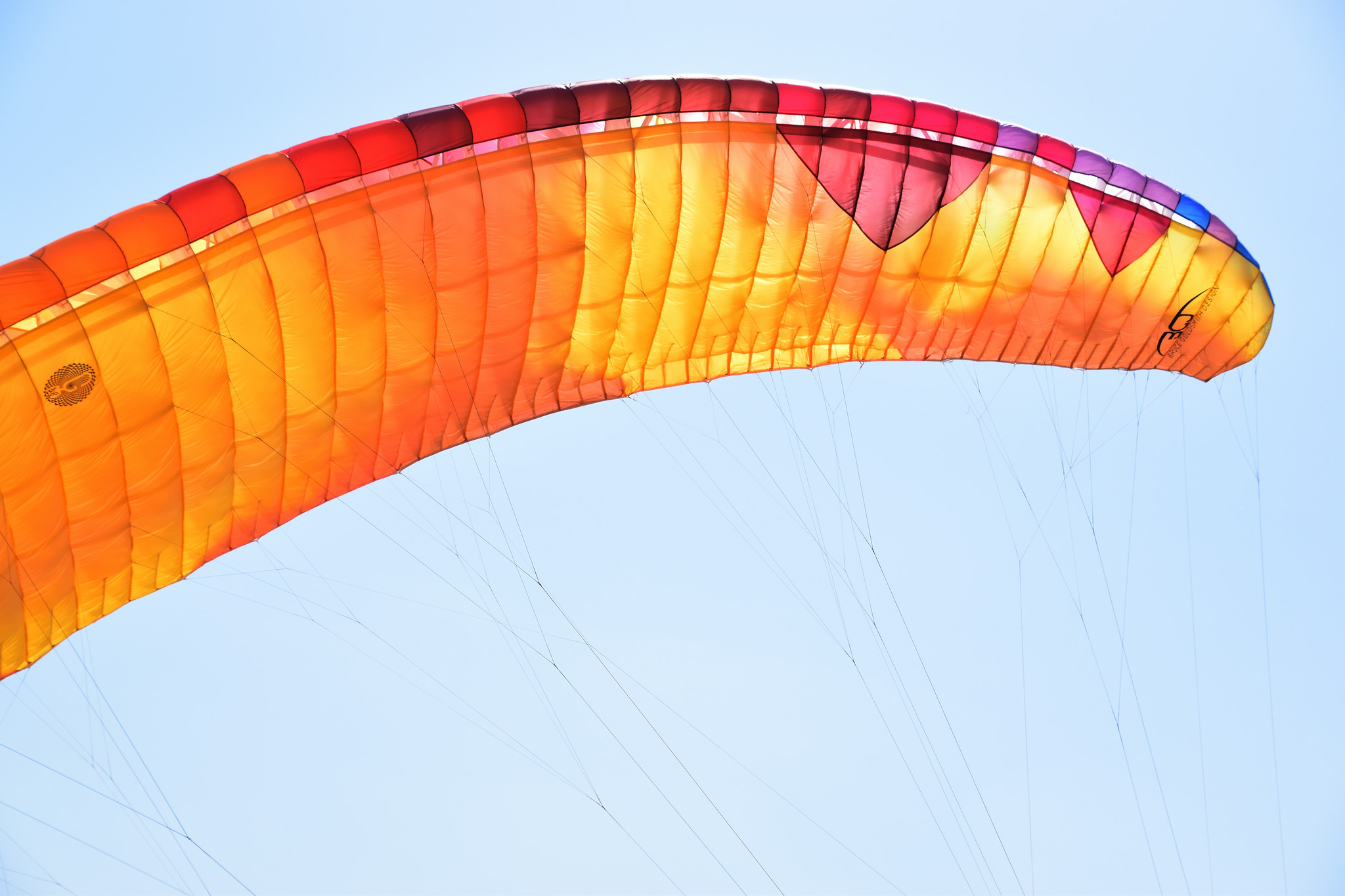
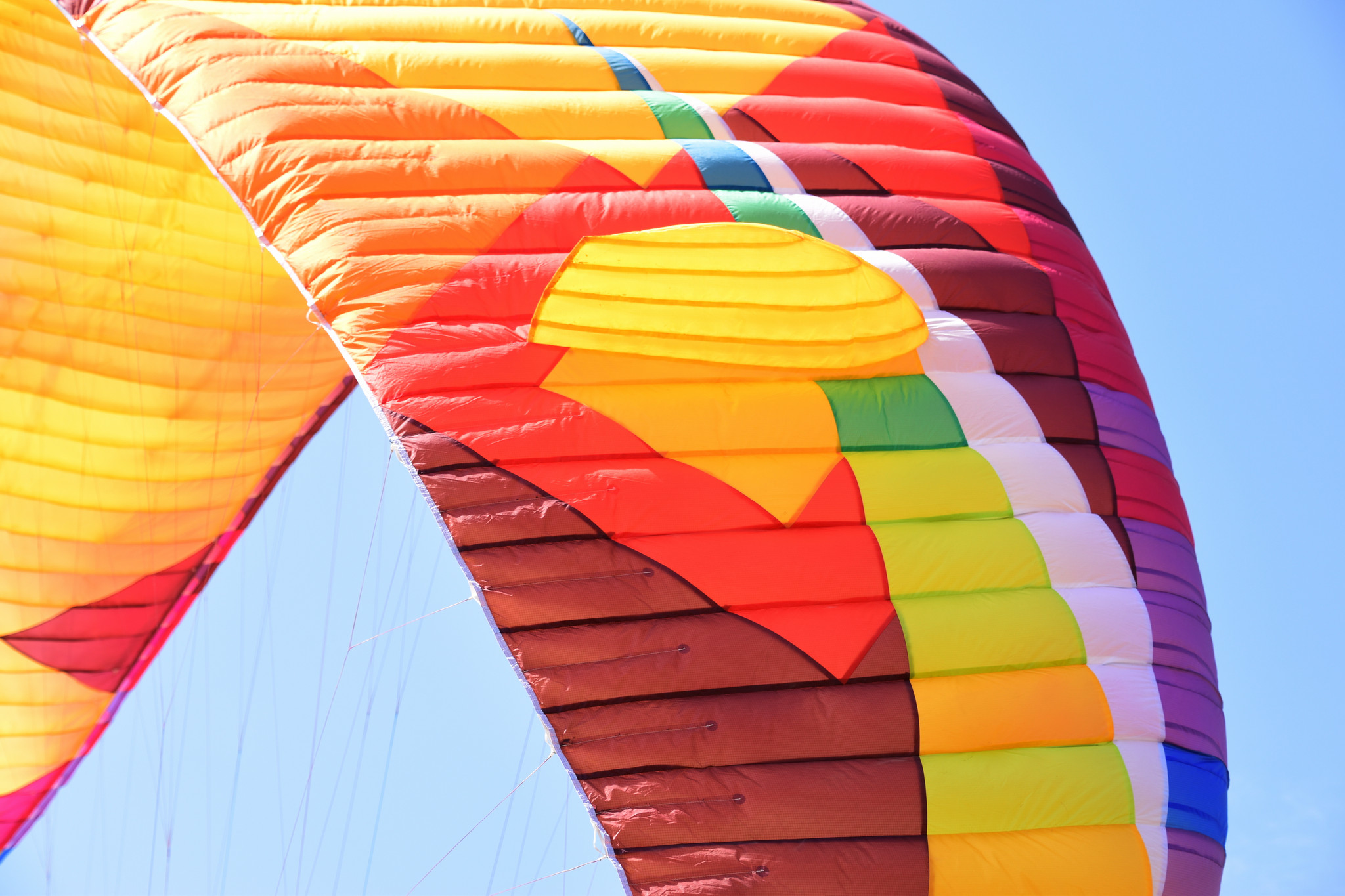
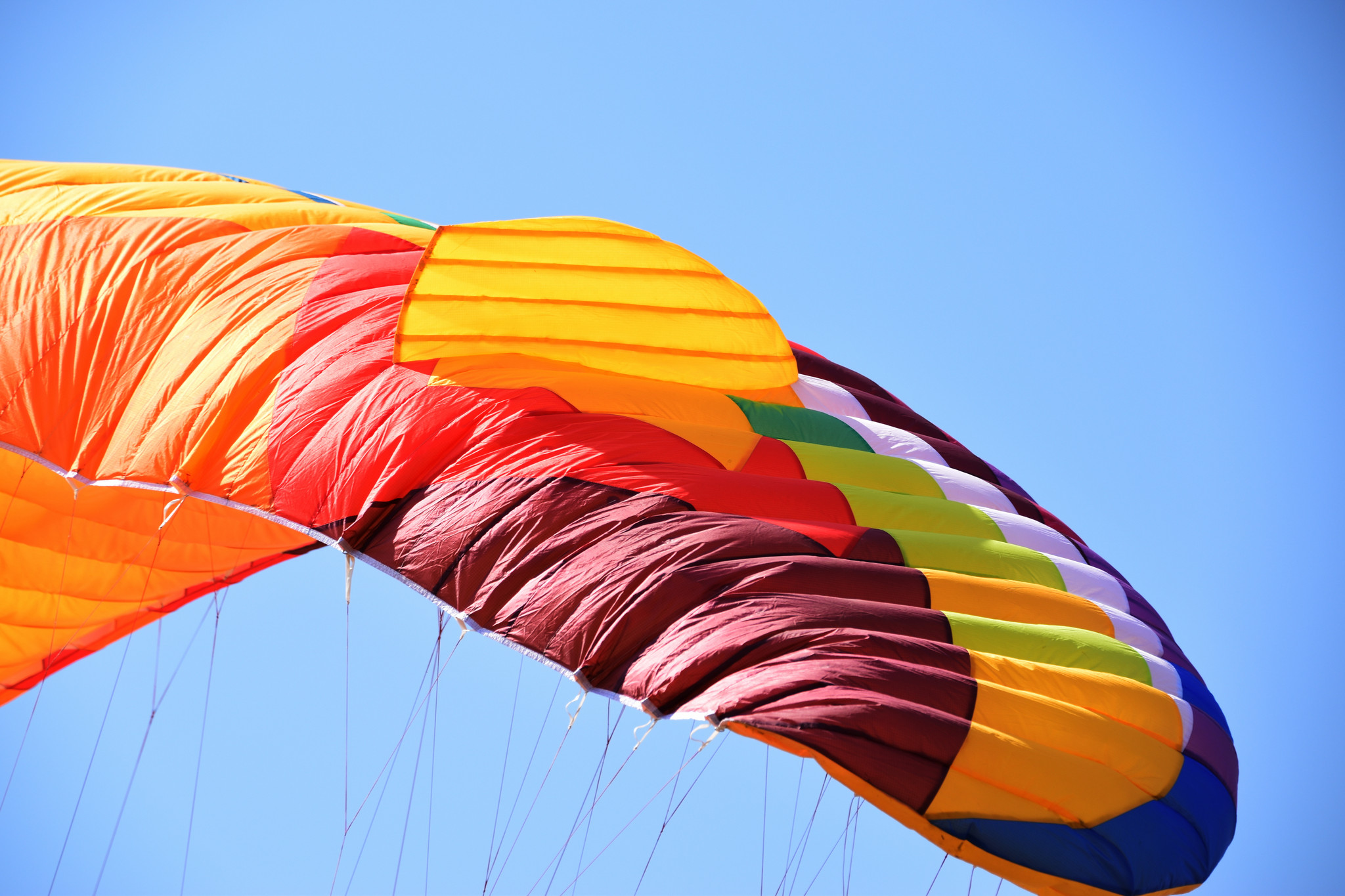
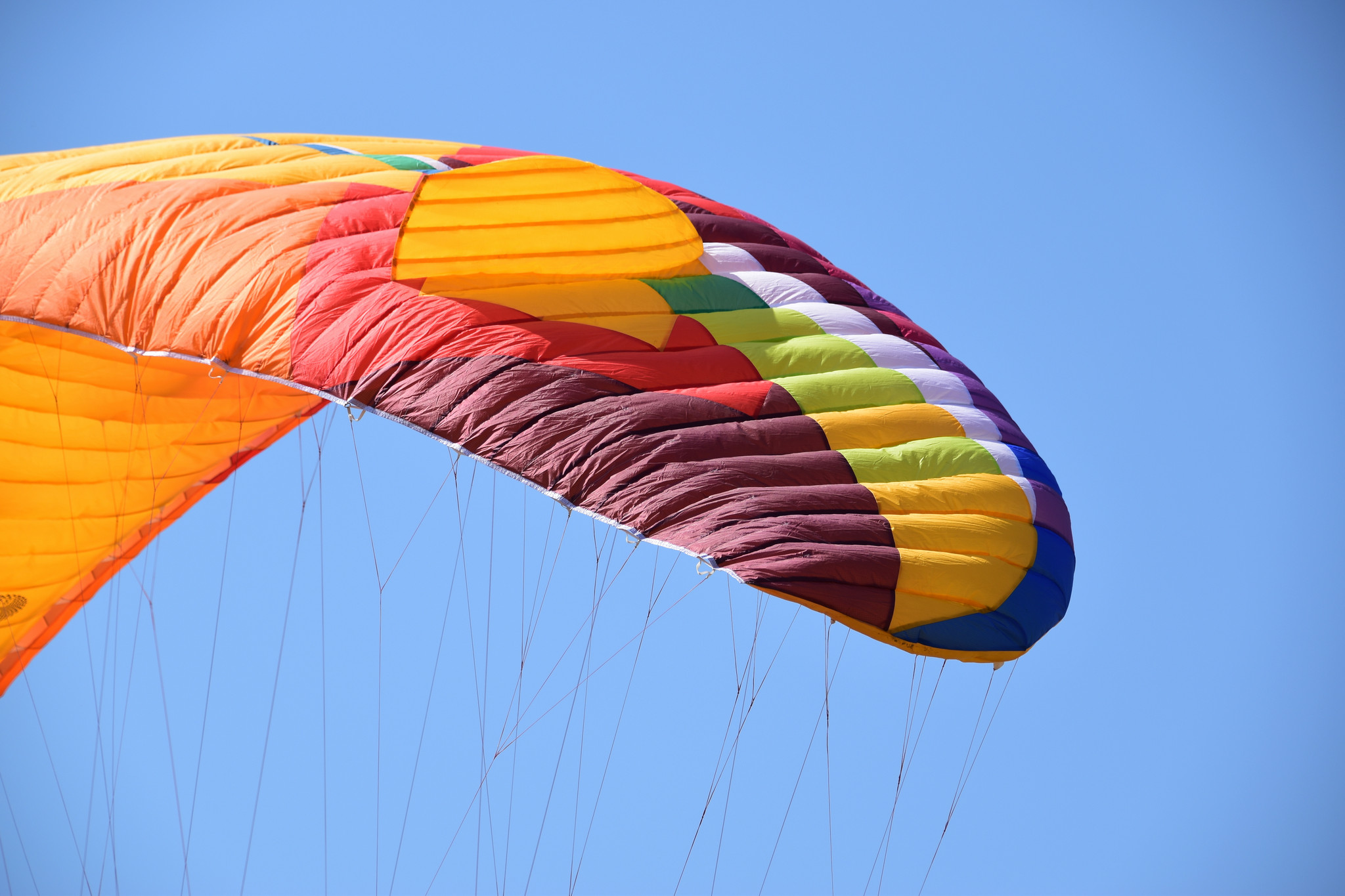
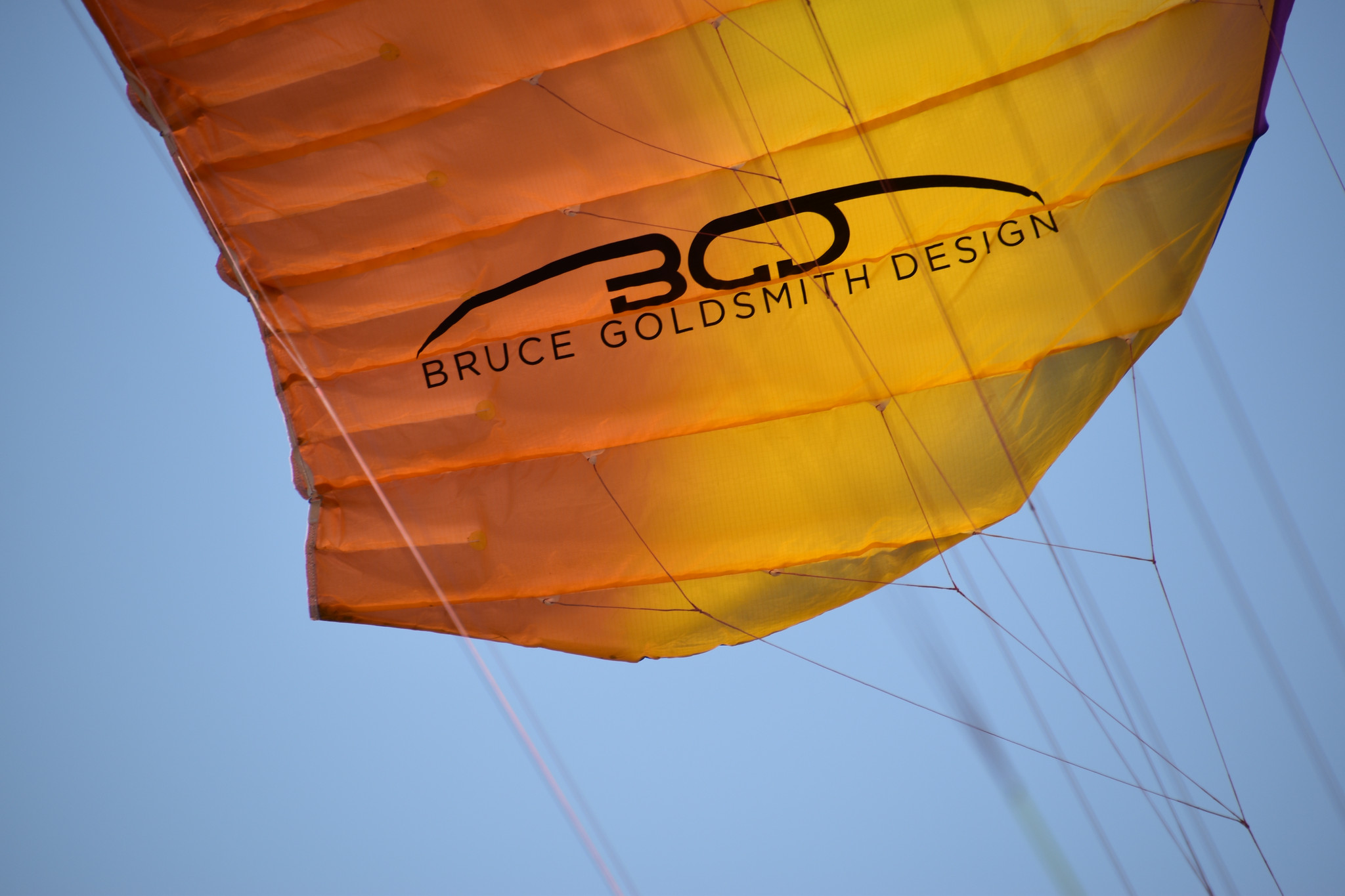
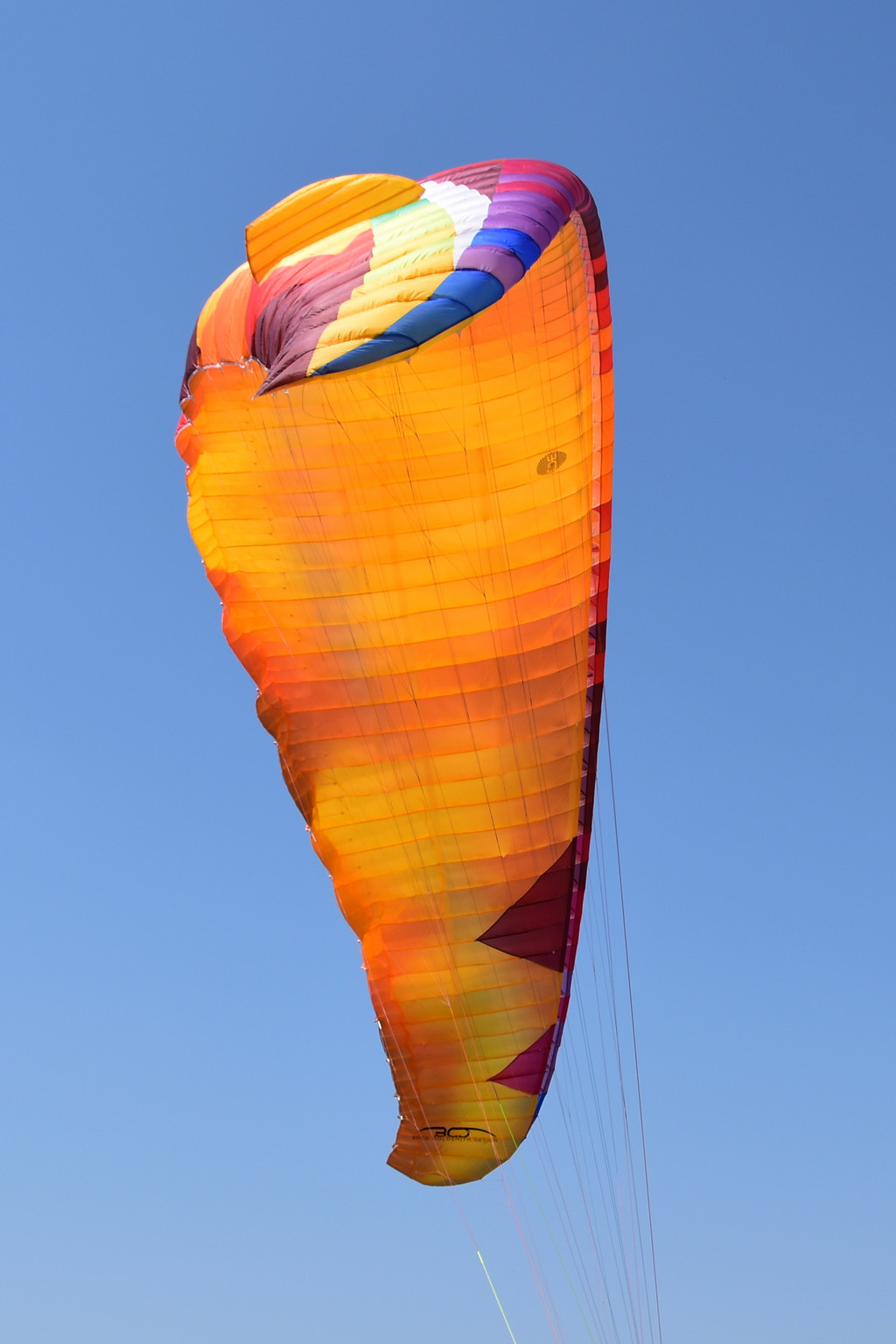
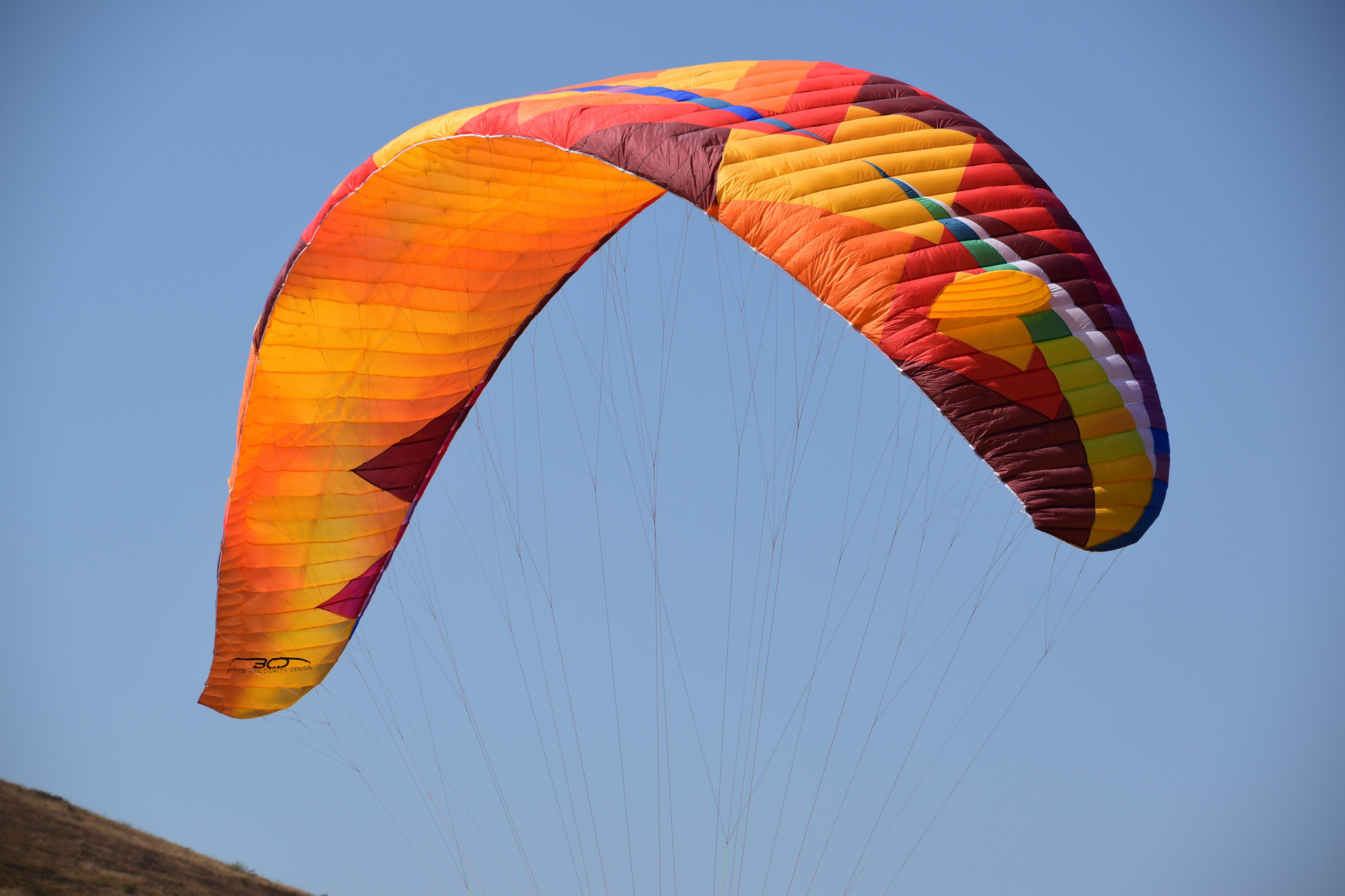
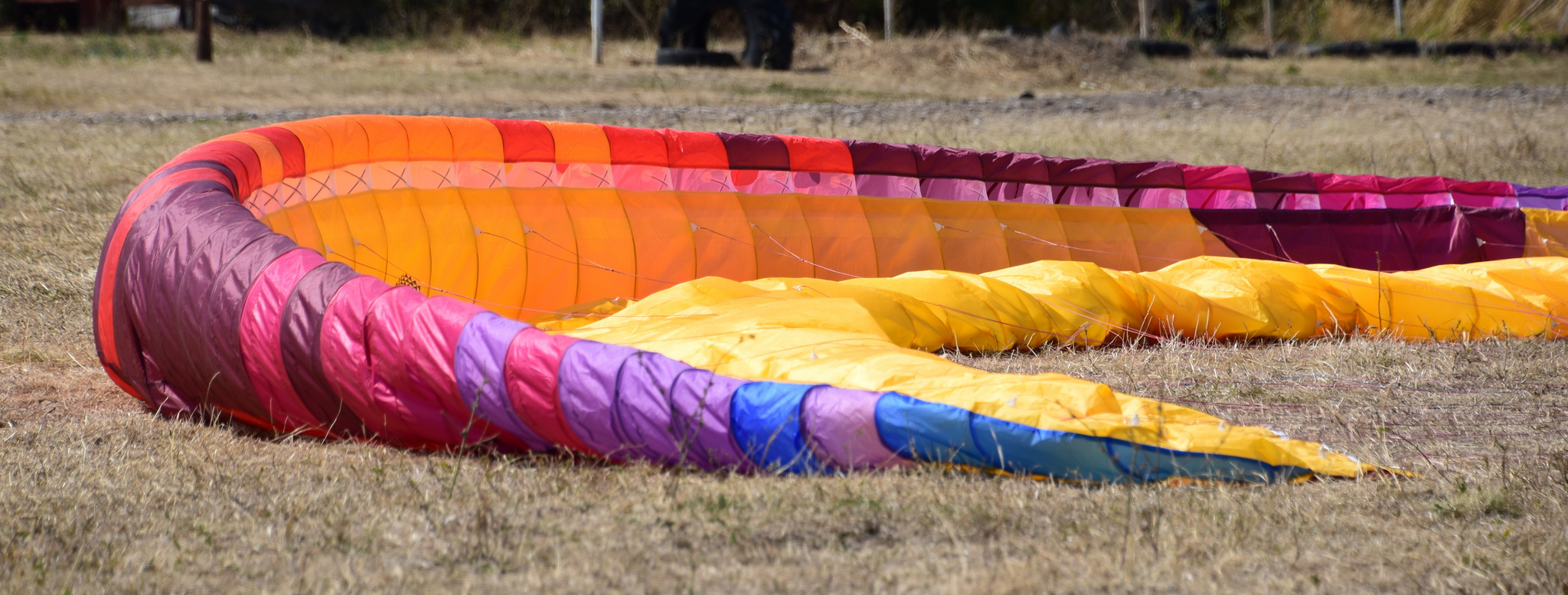
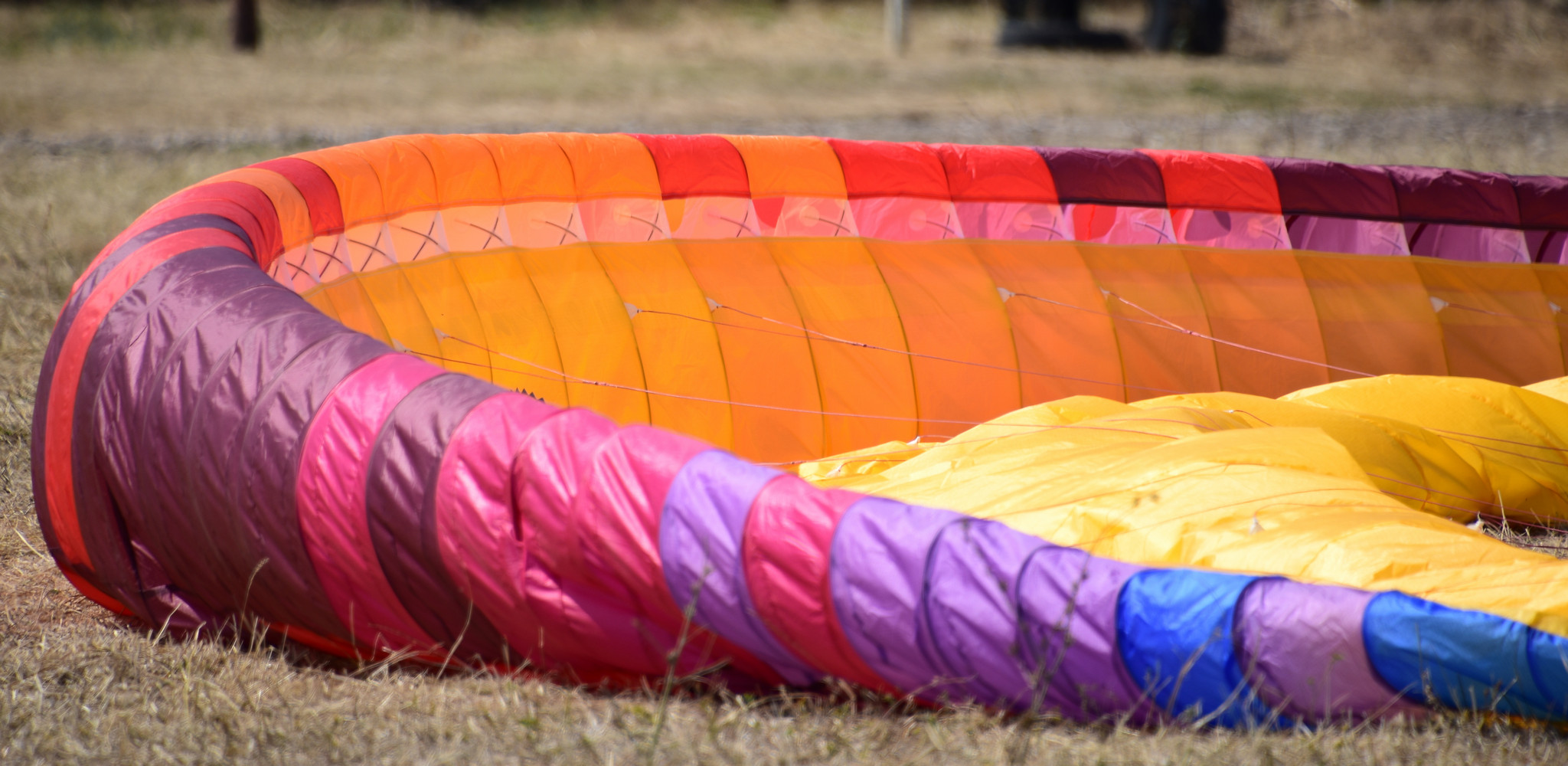
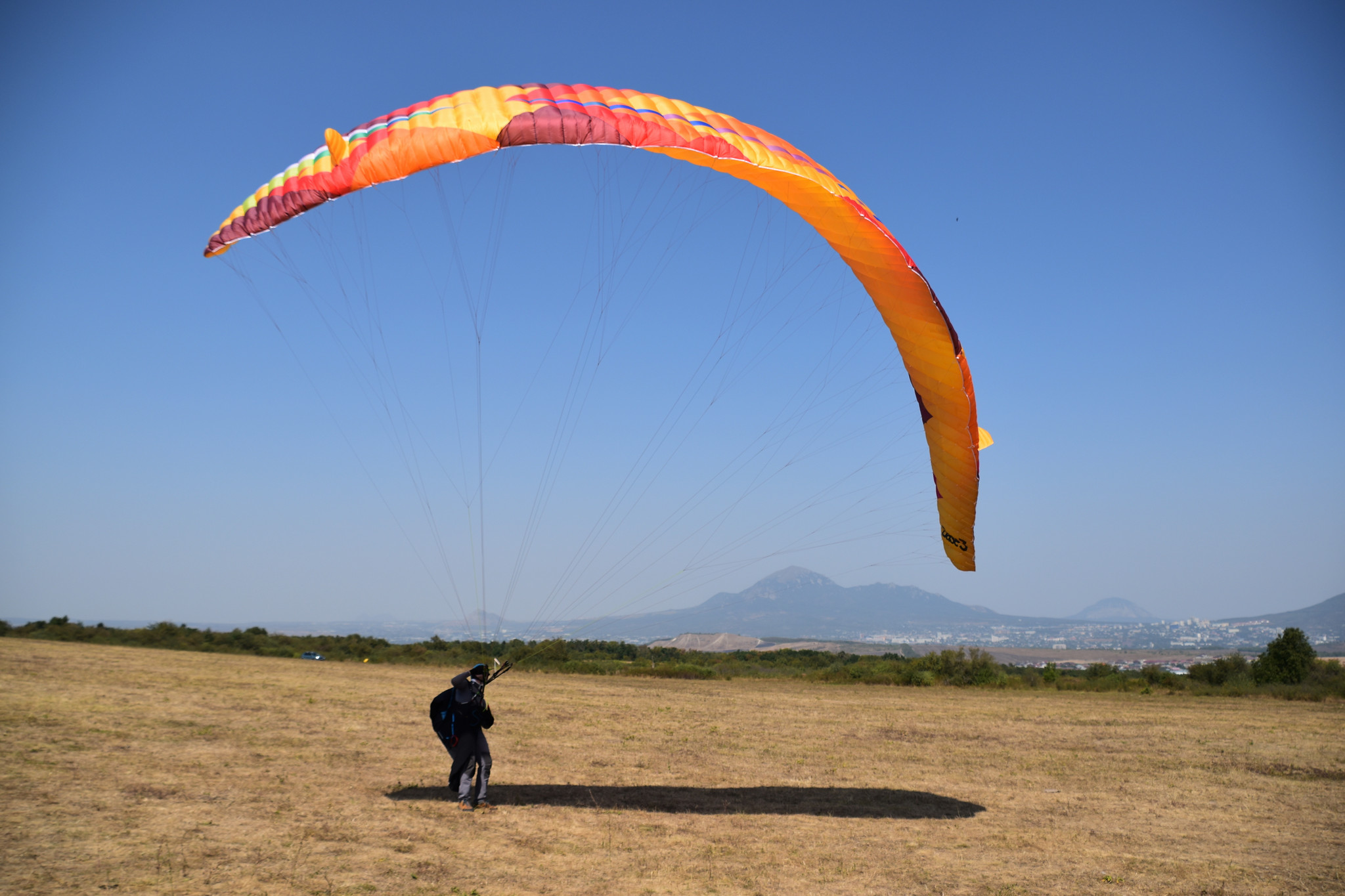
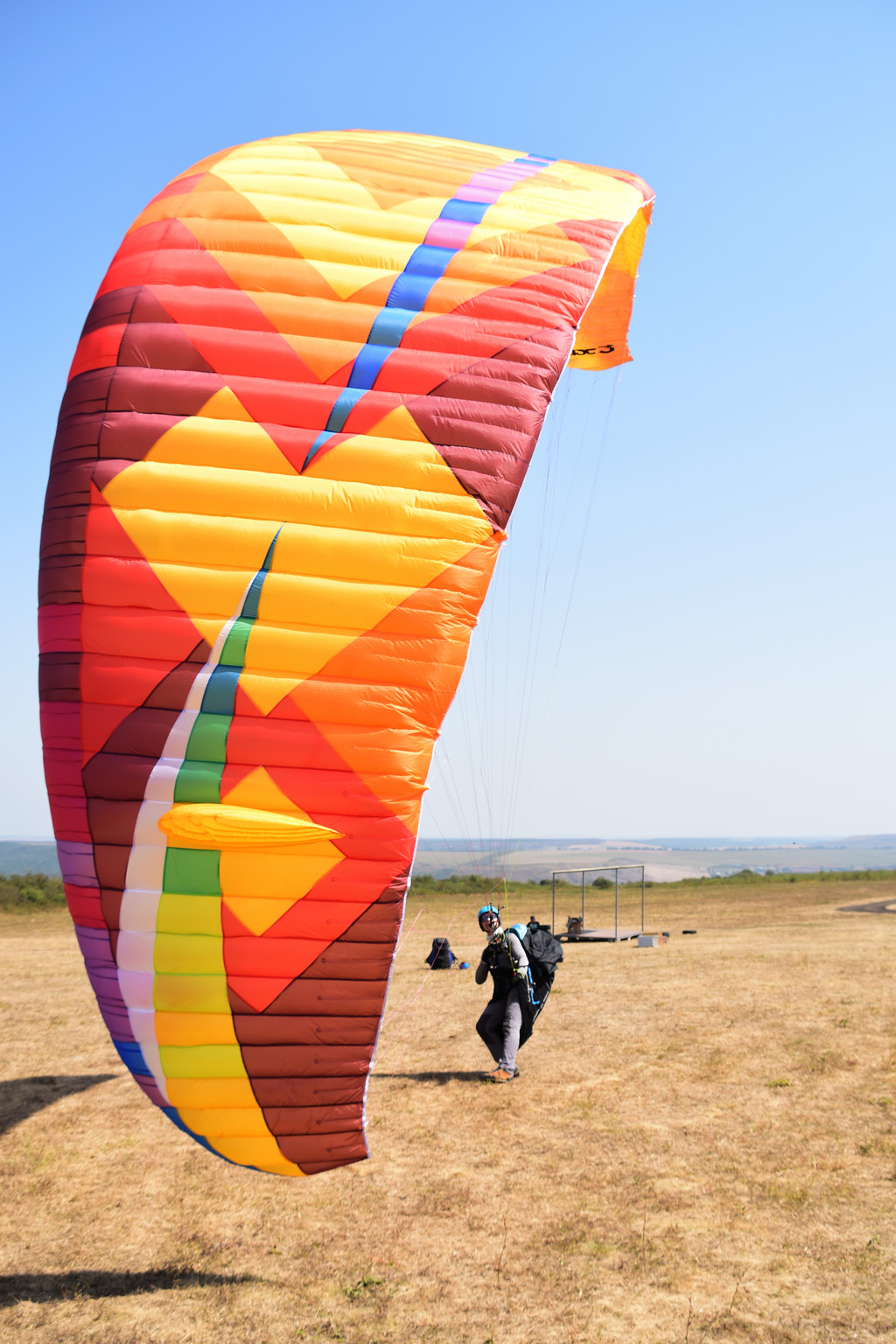
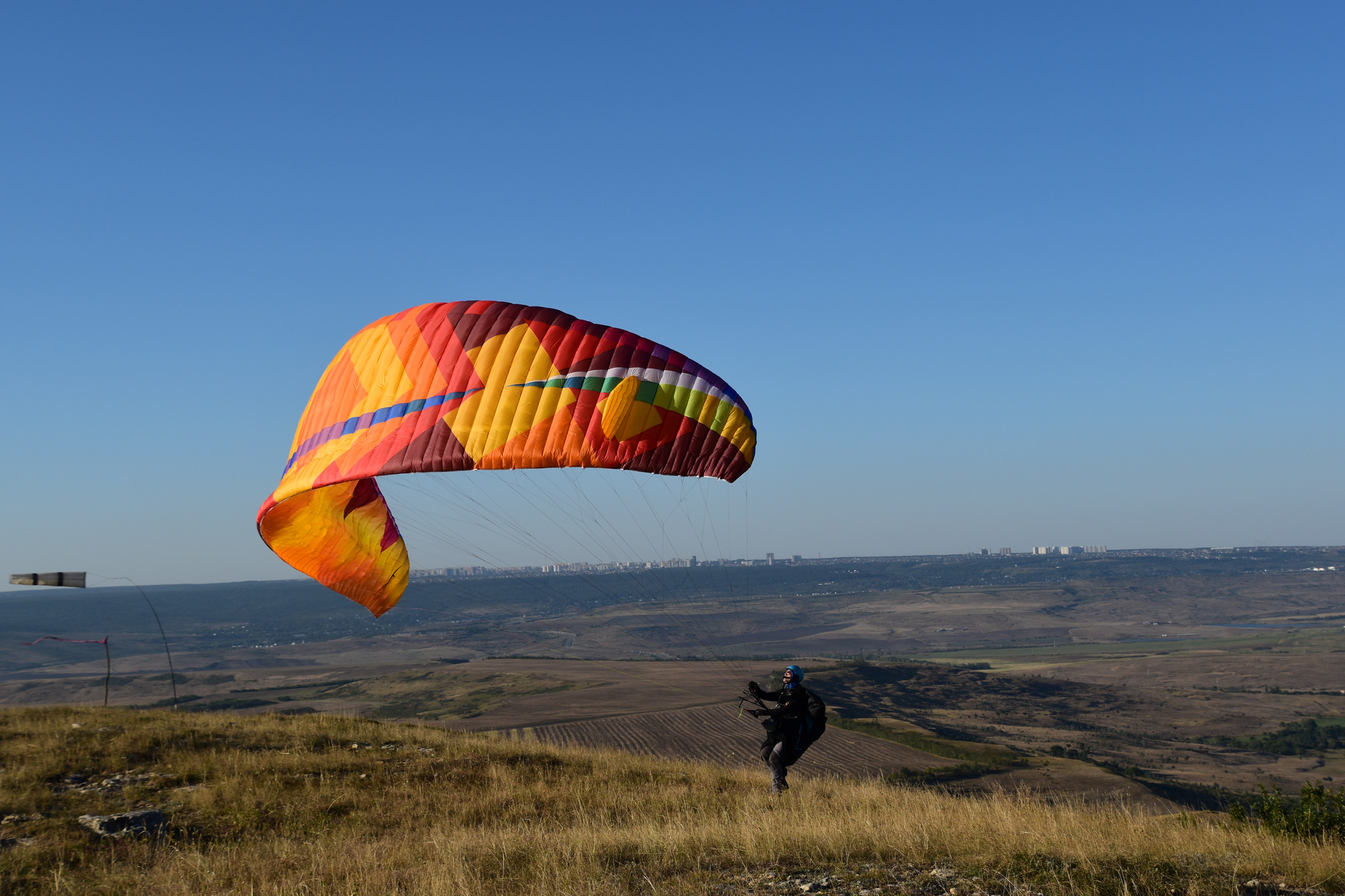
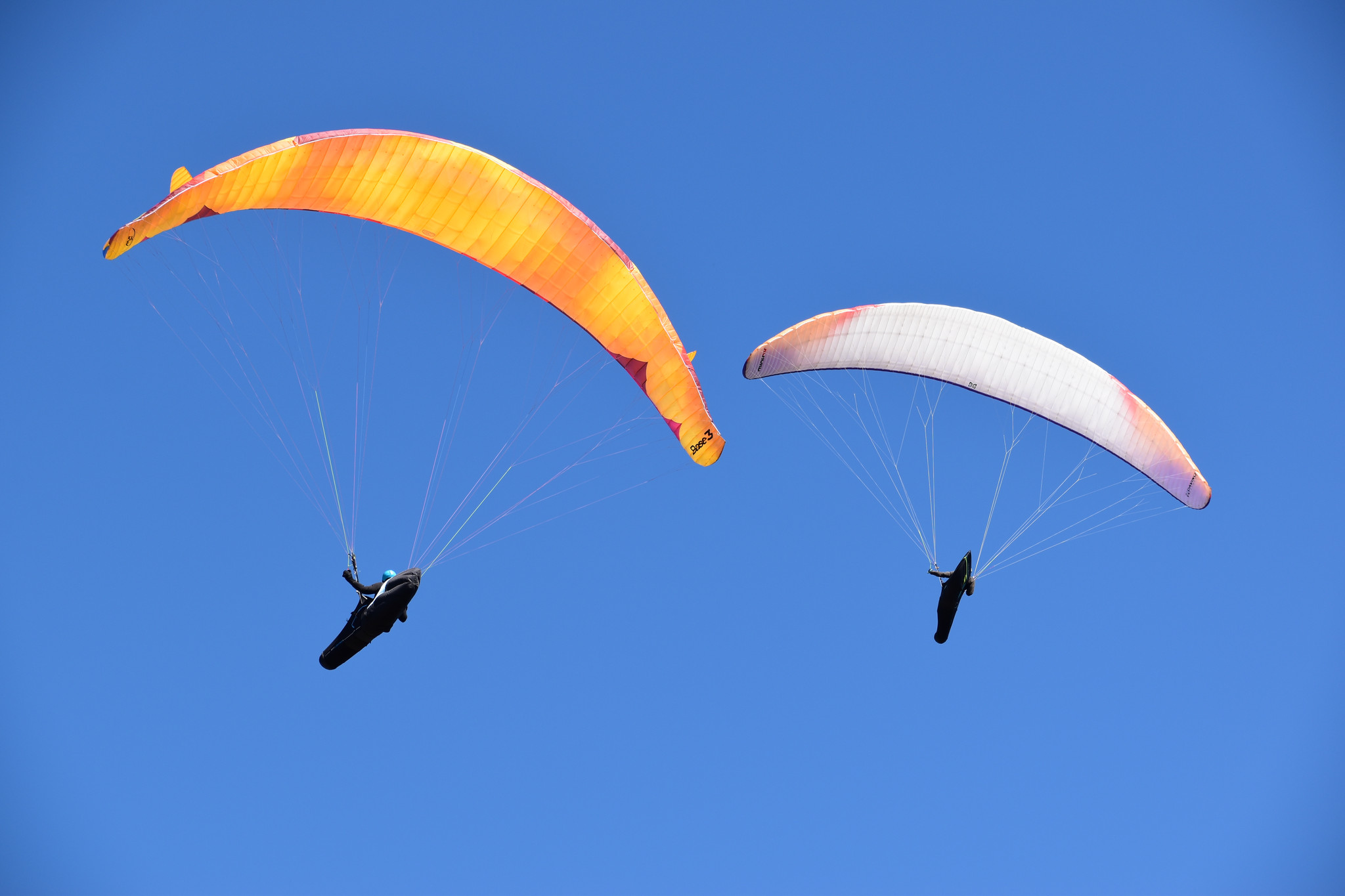
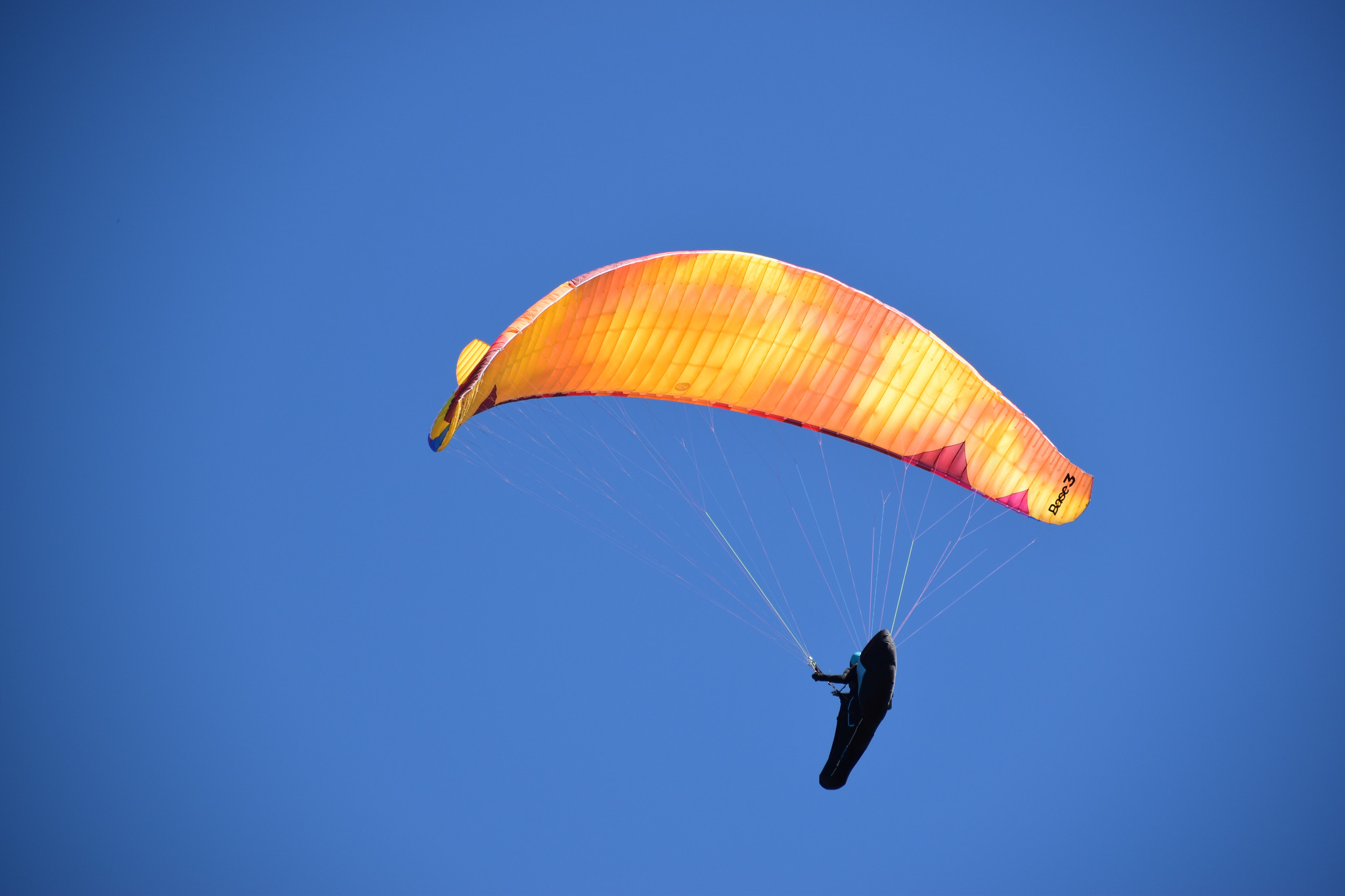
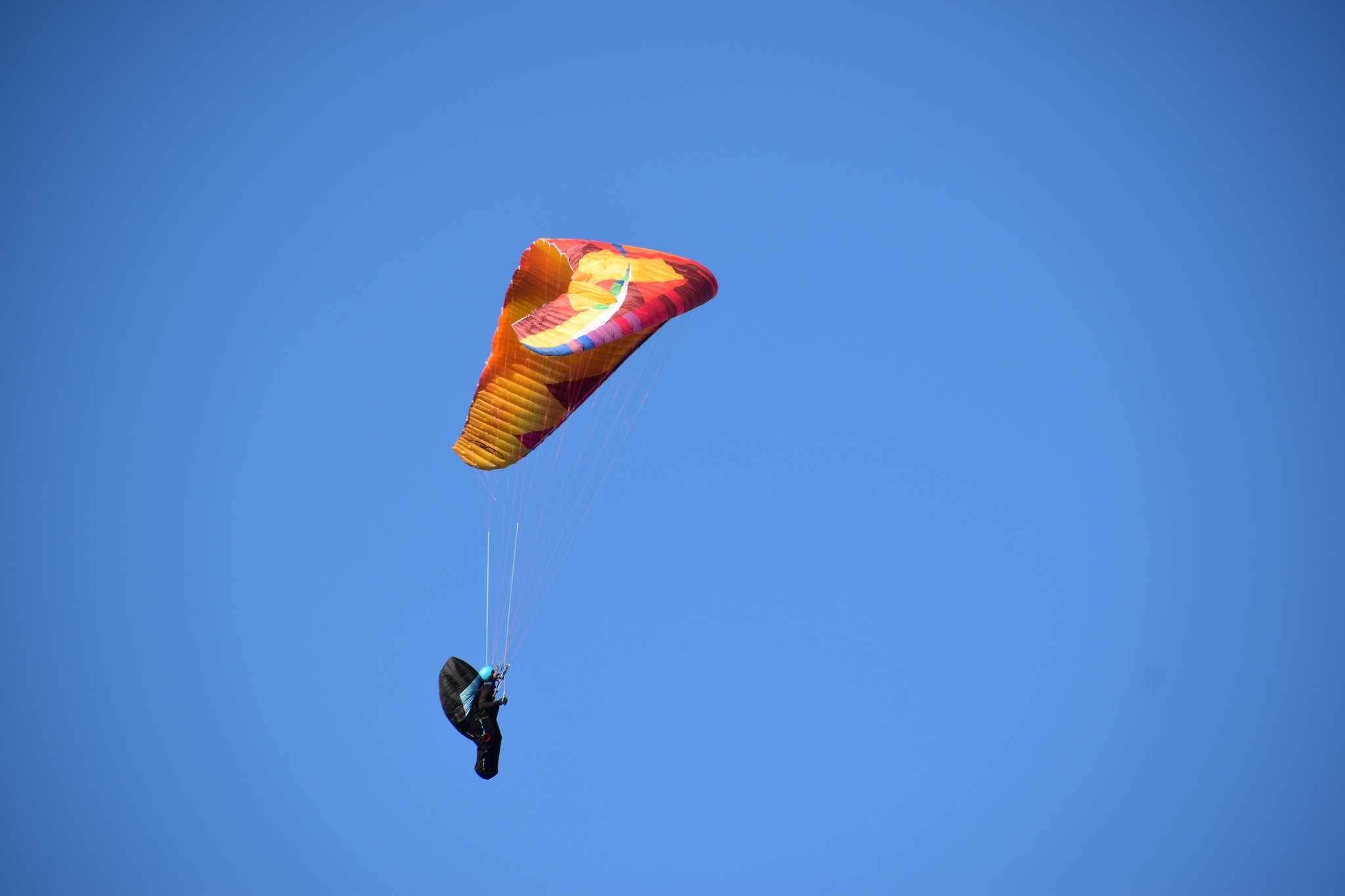
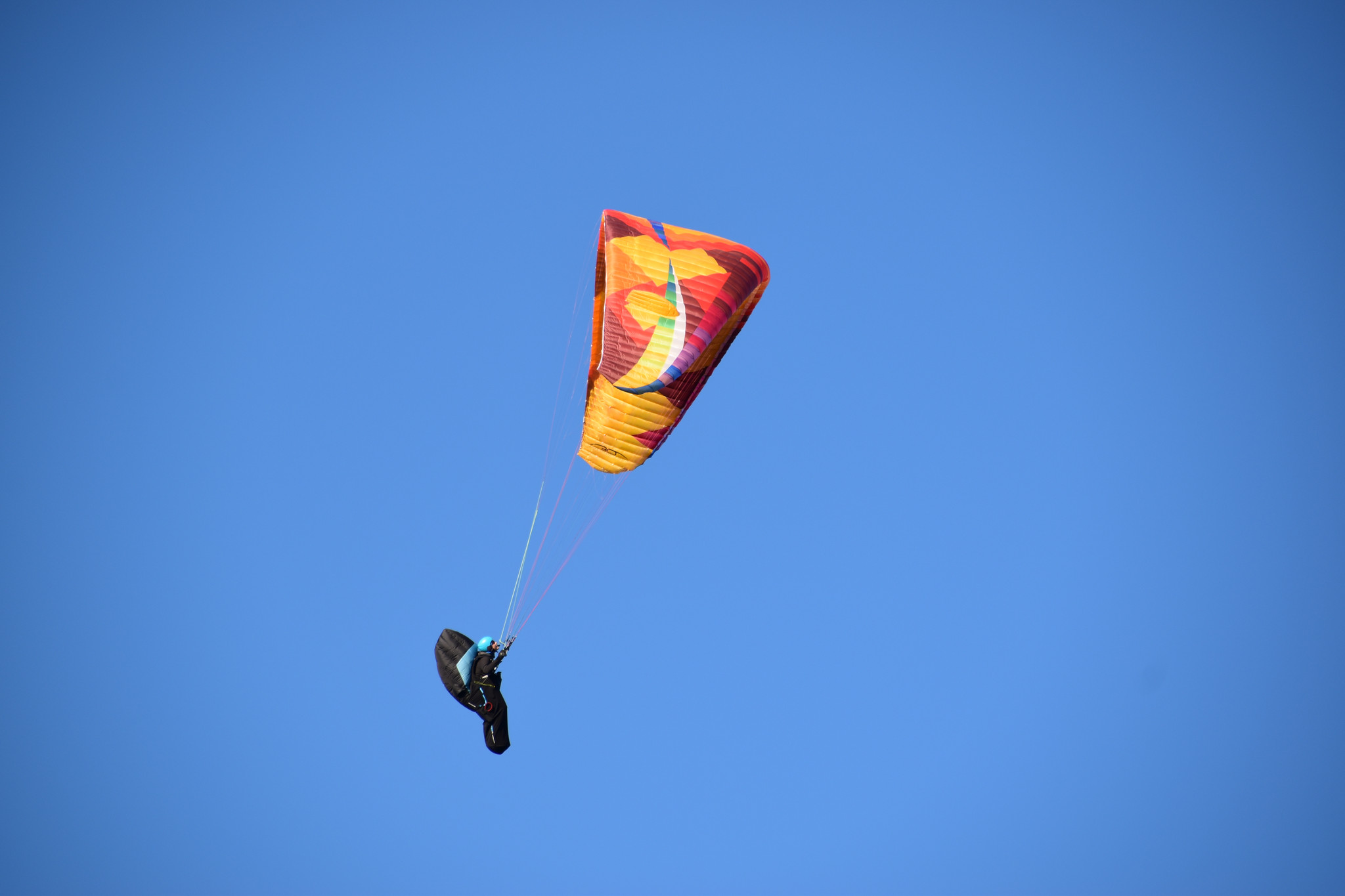
It's been a long time since I felt such strong emotions while studying a wing's construction! It would seem old Goldsmith didn't create anything revolutionary. The lines create too much drag? Down with a couple of meters of line height! Most modern wings don't turn well? Let's remember the wild experiments of the nineties and make the arc like the roof of a Swiss chalet -- such wings always handled great. Pilots don't want to be shaken and collapsed? Long live fat reflex profiles! Need more brake travel and higher internal pressure? Sharknose! And, to top it all off -- cleverly shaped wingtips, a straight leading edge and the fashionable "ears" that improve the chances of getting out of a steep spiral, creatively borrowed by Ozone from Advance. Everything seems clear, everything is known. But to combine all these tricks in one wing, and so boldly, straightforwardly and even recklessly -- you have to be Goldsmith! And if that's not enough, to blow your mind completely, you have to cut the wing into small polygonal patches and paint them in the most acid of all acid colors. As a result, the onlookers' jaws quietly drop right into the grass of the Yutsa launch. The Base 3 looks truly insane! You can hardly believe that THIS can fly. And yet it can. And how!.. Interestingly, the insanity of the Base Three's shape really hits you in the eye when you look at it from the side, but when you groundhandle it, it looks somehow more conservative. Black magic, no less! (Goldsmith once had a hang glider called Black Magic, but that's a completely different story...)
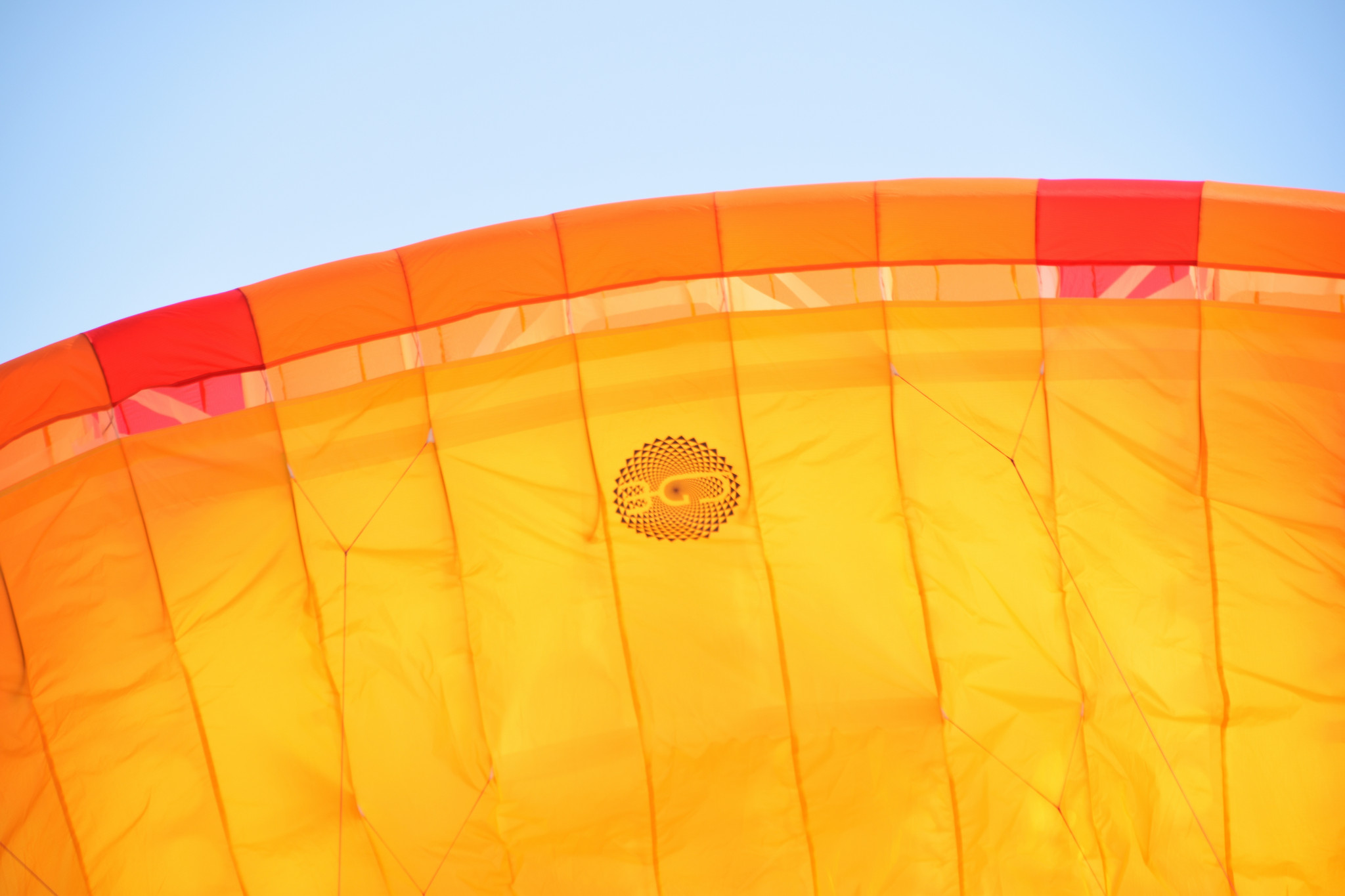
OK, enough lyrics, let's move on to pragmatics. The AR of our test subject is probably the most conservative thing about it. A completely ordinary figure for 2025: 5.7. Not a cosmic number of cells either, 57 of them. But the internal structure would do credit to some top wings. Lots of internal spanwise tension straps, both near the bottom and near the top surface of the wing. Complex 3D shaping. Additional half-ribs in the rear part of the chord. And of course, a pronounced sharknose -- how could it be without one! But the trailing edge turned up, typical of many "reflex" profiles, is not to be seen on the Base 3. It looks like the S-shaped mean line of the profile was achieved by some other methods, and in my opinion that is good and right. The rigid elements of the construction are thin but stiff rods -- they look like carbon, but it's nylon after all. No nitinol! Monsieur Goldsmith showed the same unexpectedly healthy conservatism in the choice of fabrics. The most ordinary, fairly dense Skytex. Obviously, a wing built from such hefty materials can't be light. And indeed it isn't -- more than 5 kg in size M, although we are not talking about a racing car at all. The packing volume is a compromise, though: the Base 3 does fit into a 90-liter backpack, even if just barely.
Risers
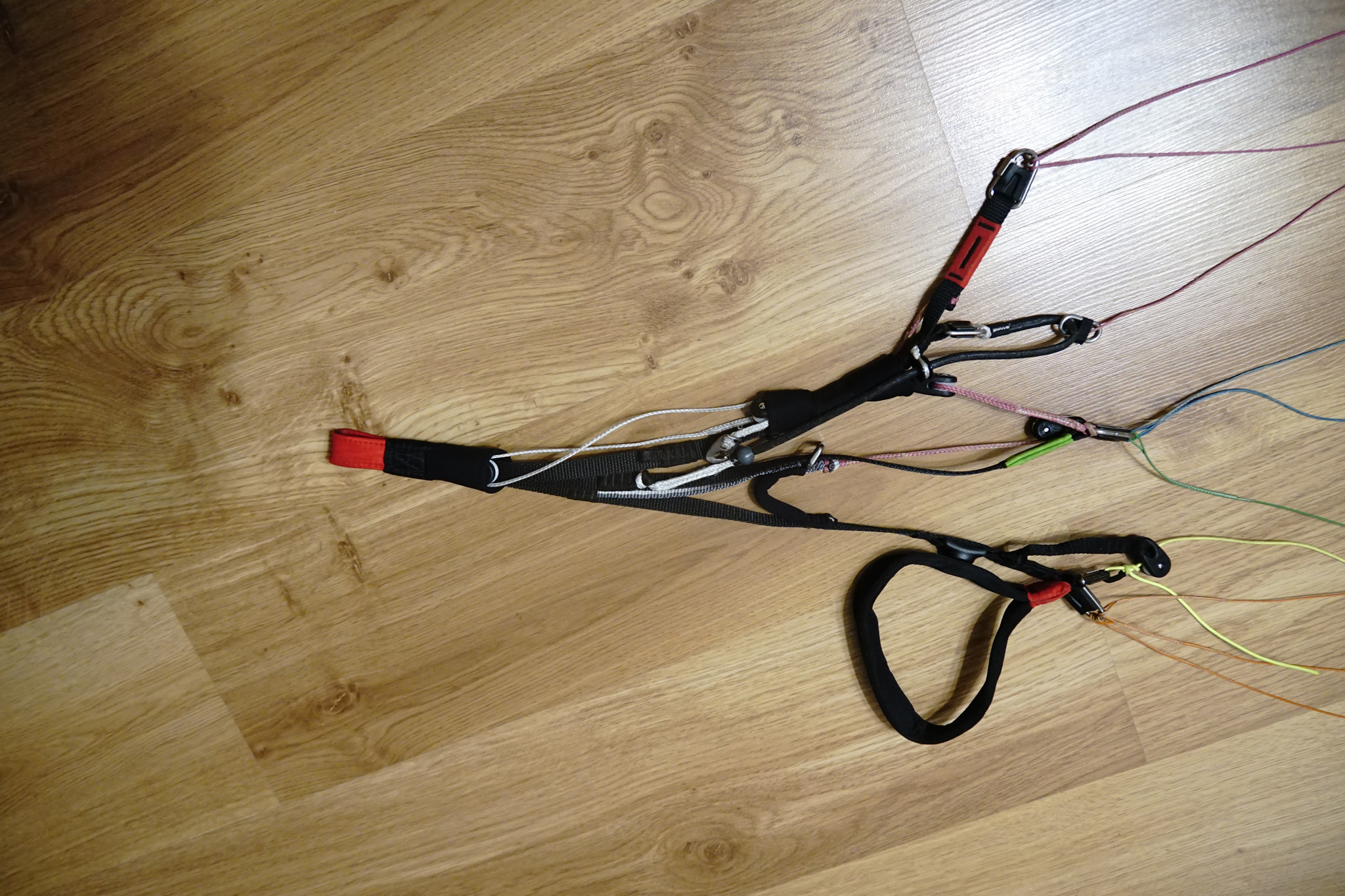
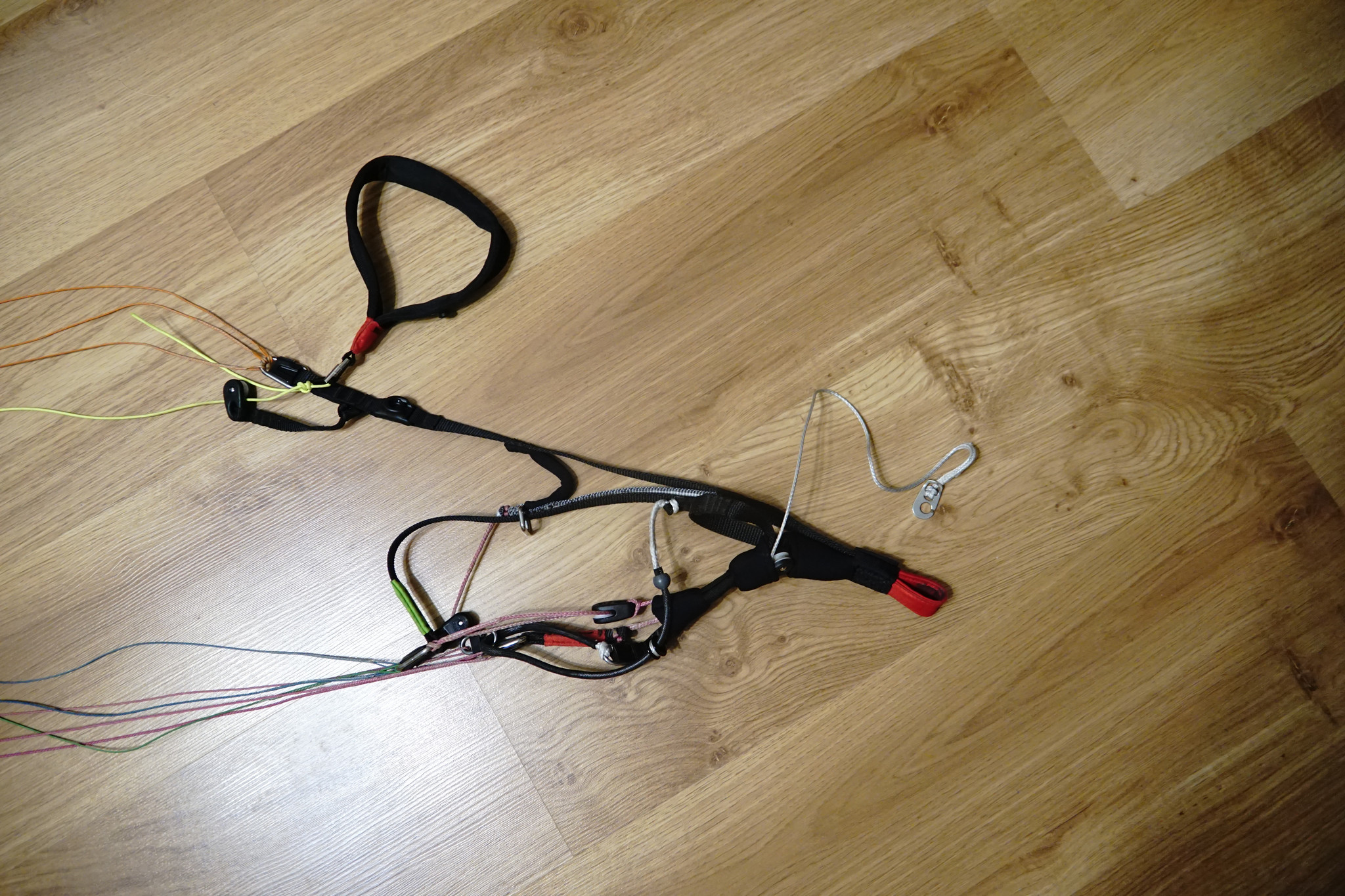
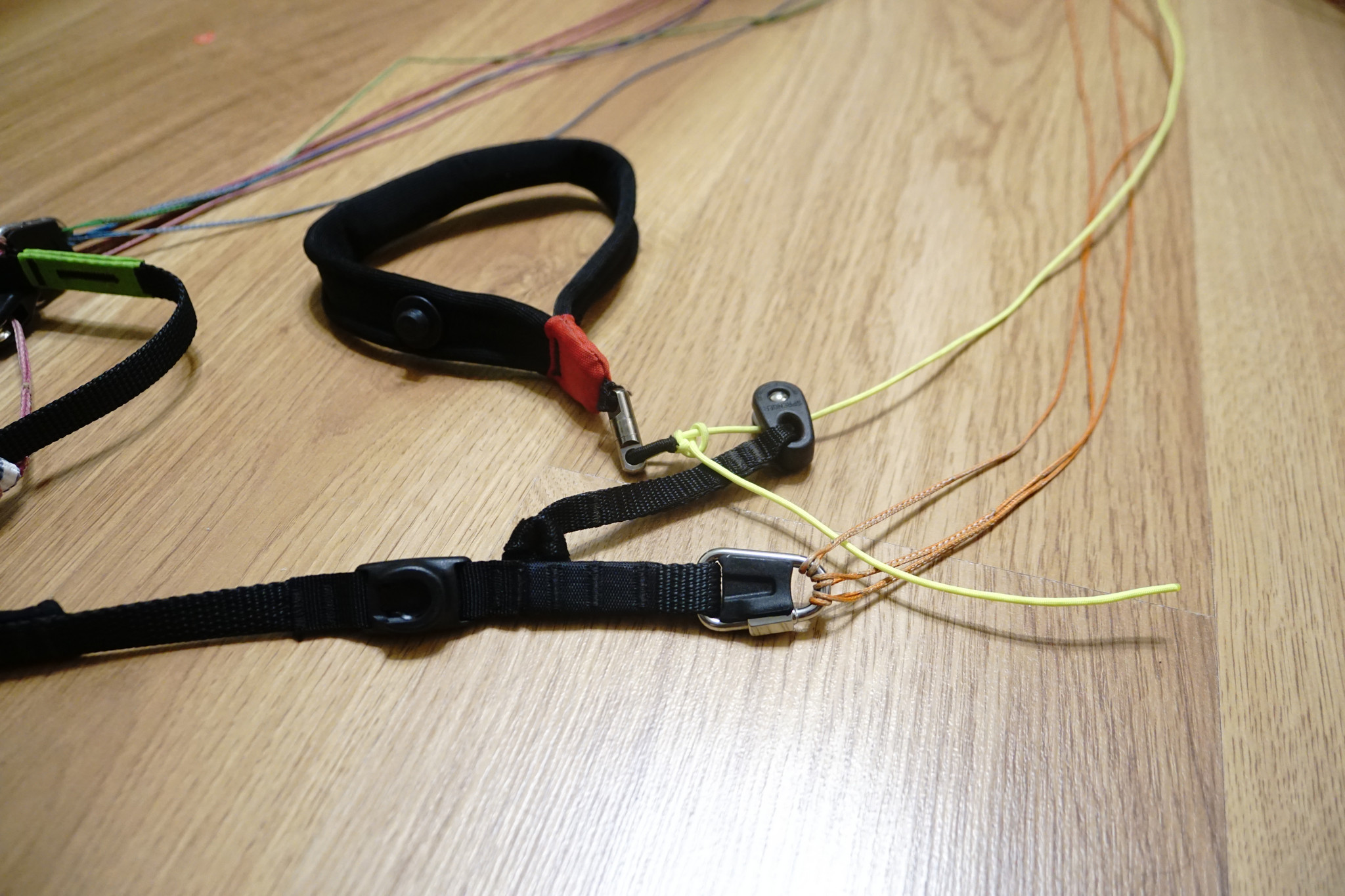
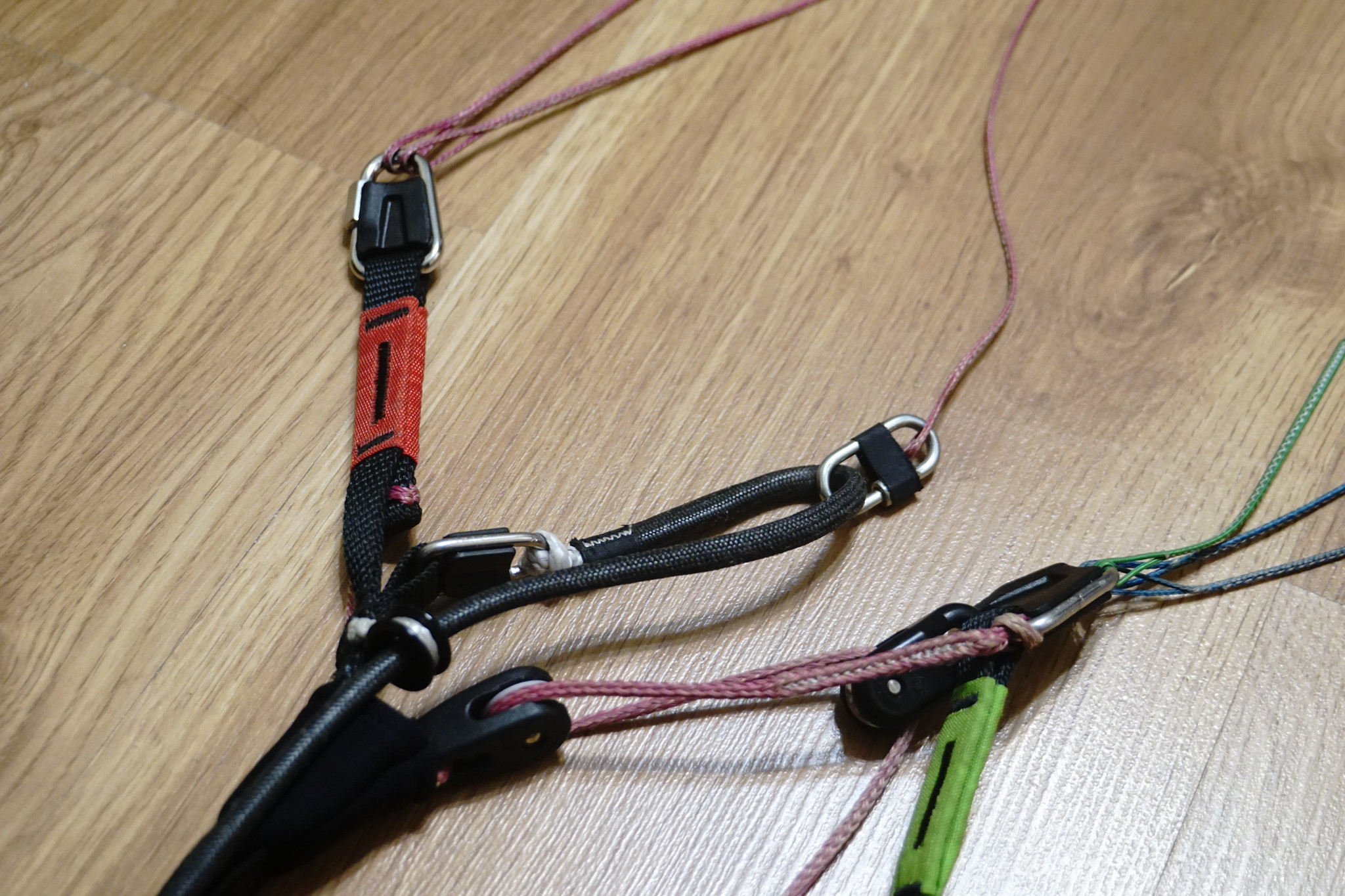
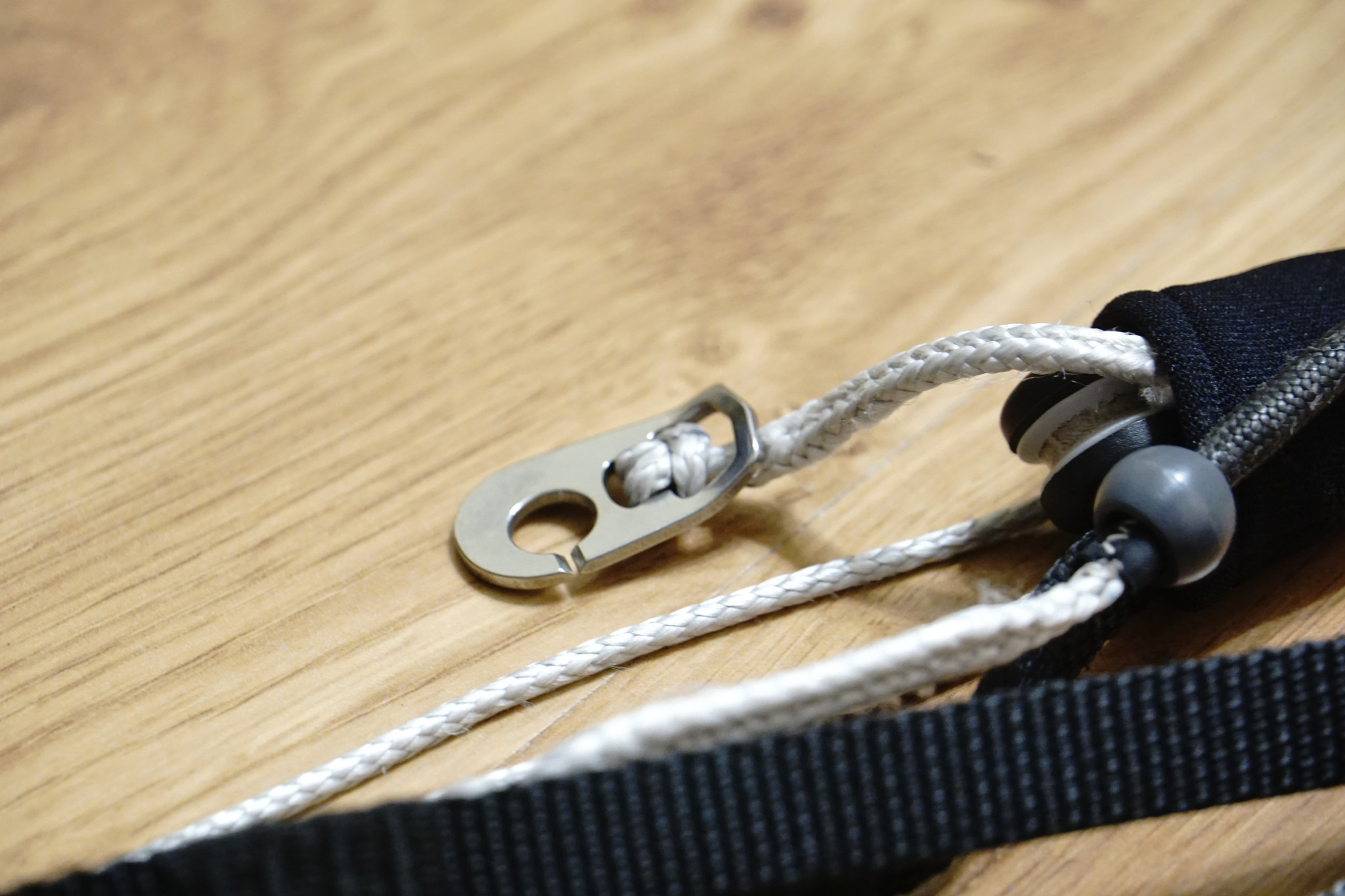
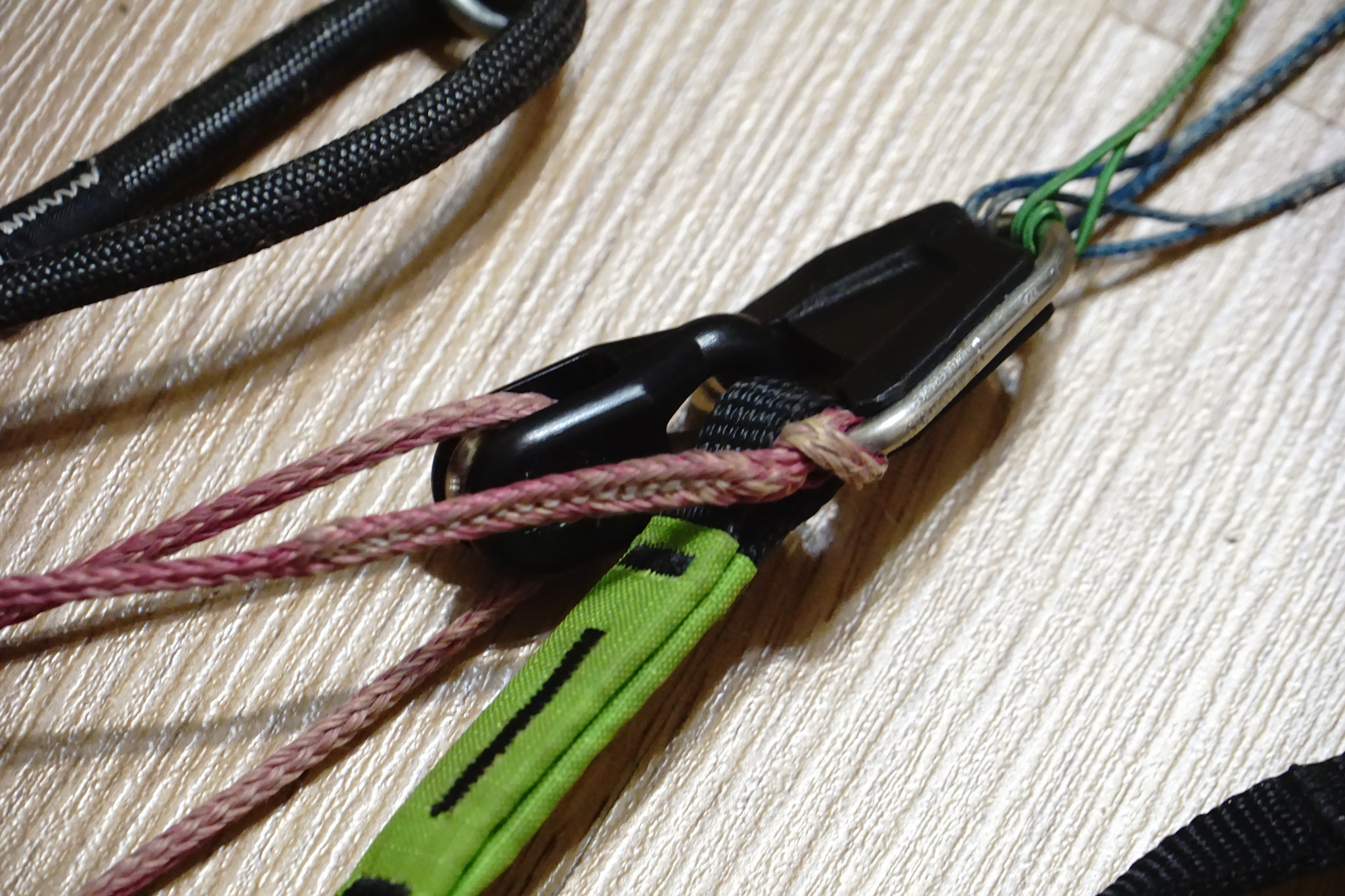
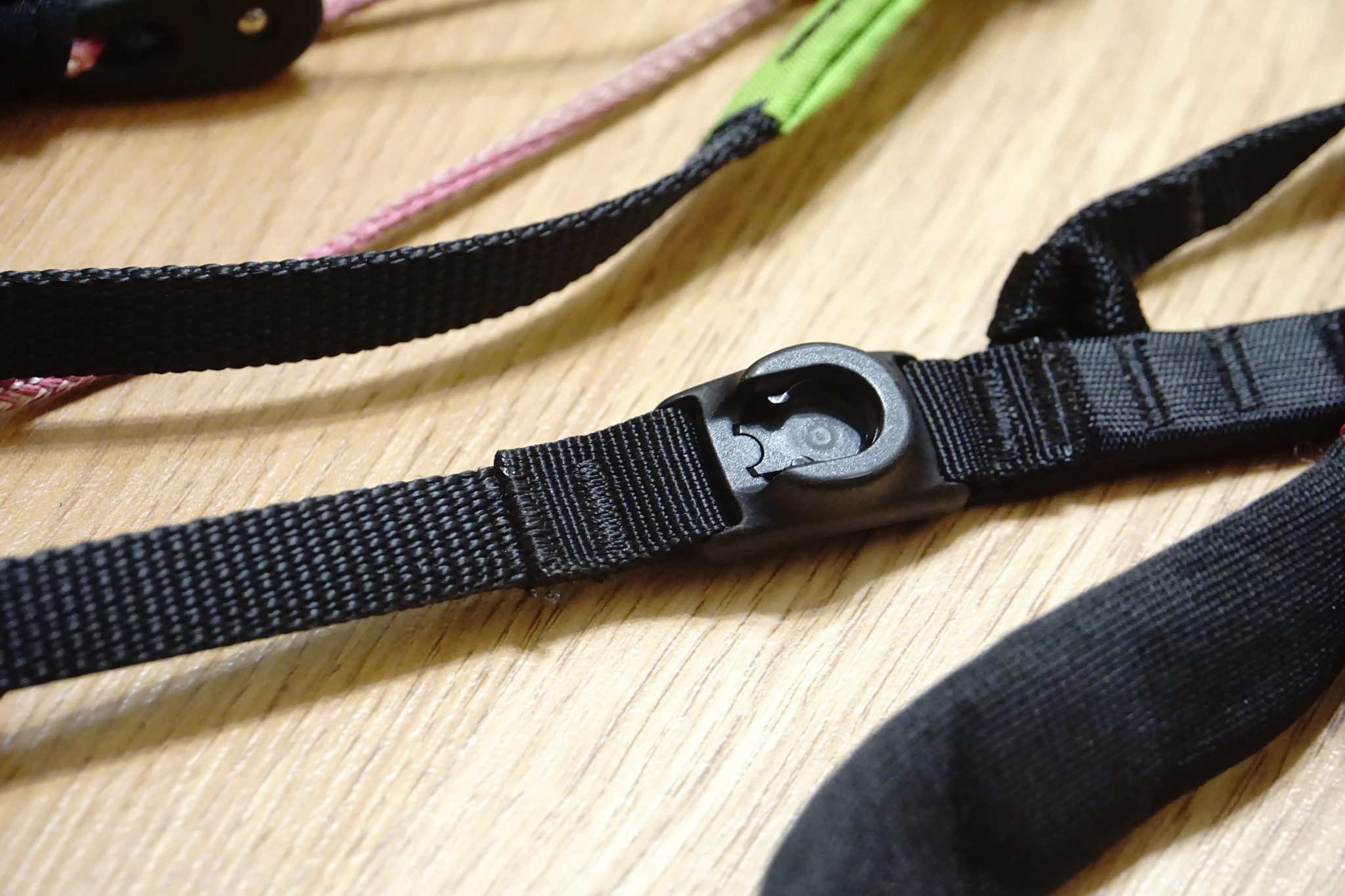
Simpler than Base's crazy canopy, but not without interesting details. For example, the running rigging -- more precisely, some of the moving parts of the risers -- is expectedly made of thick Dyneema, but partly tucked into thick slippery "stockings" of something like nylon. A small thing, but it improves durability. Of course, there are the fashionable bridles that let you work the rear risers almost like on two-liners. The B row floats on a pulley... only this pulley, heavily loaded and important for passing forces from the wing to the pilot and back, is a fairly simple one. Don't expect very low friction from it. But I was pleased with the quality Brummel hooks in the speed system. The brakes are about like everyone else's: good quality, but nothing special. Overall -- normal modern risers.
Lines
In some ways no less insane than the Base 3 as a whole! No, no, the materials and the stitching are fine. Unsheathed lines with a red anti-UV coating on almost all levels. But their length, or rather their height... Hey, Mr. Goldsmith, where did you put a couple of meters of line height? ;)
Takeoff and ground handling
Ground handling
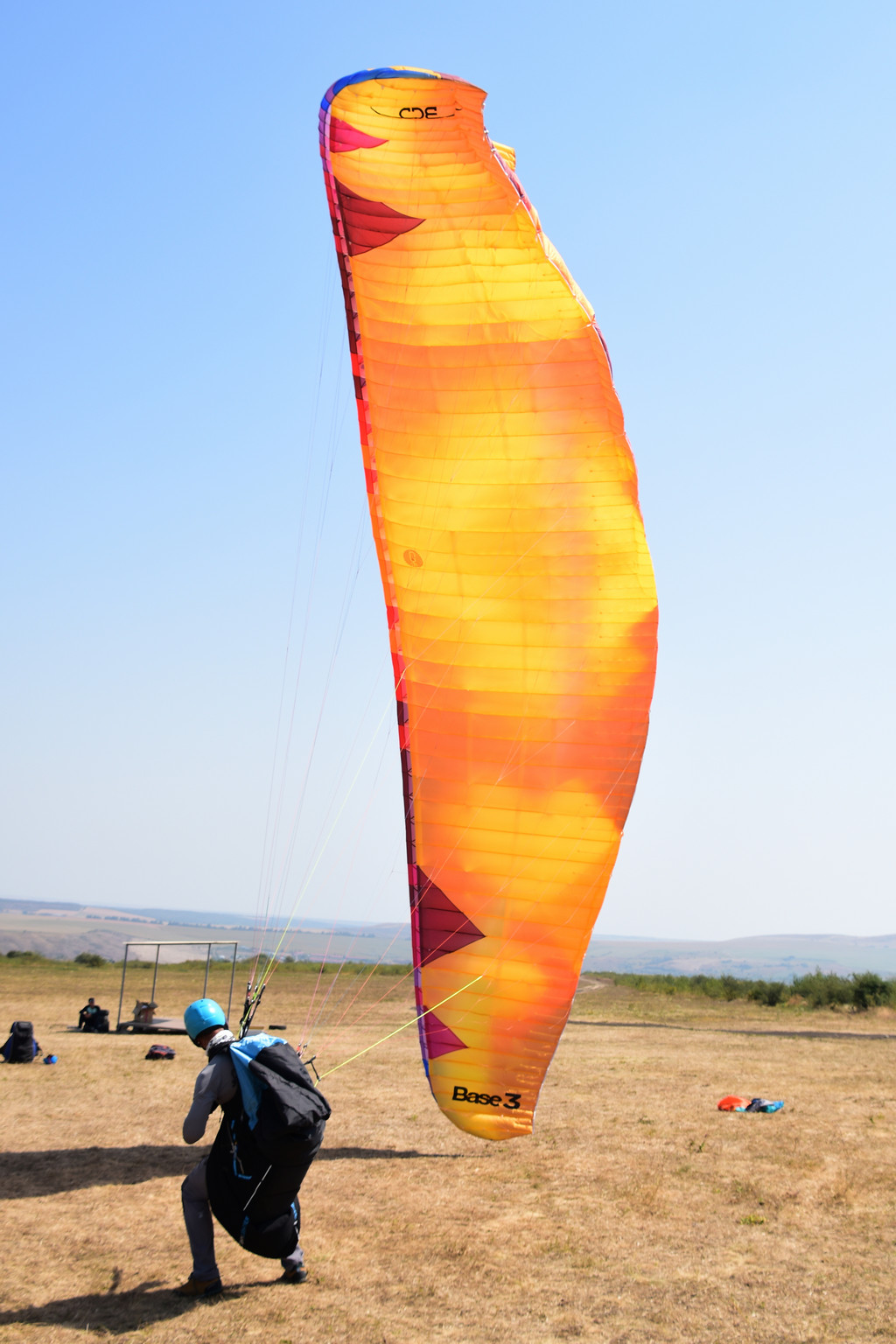
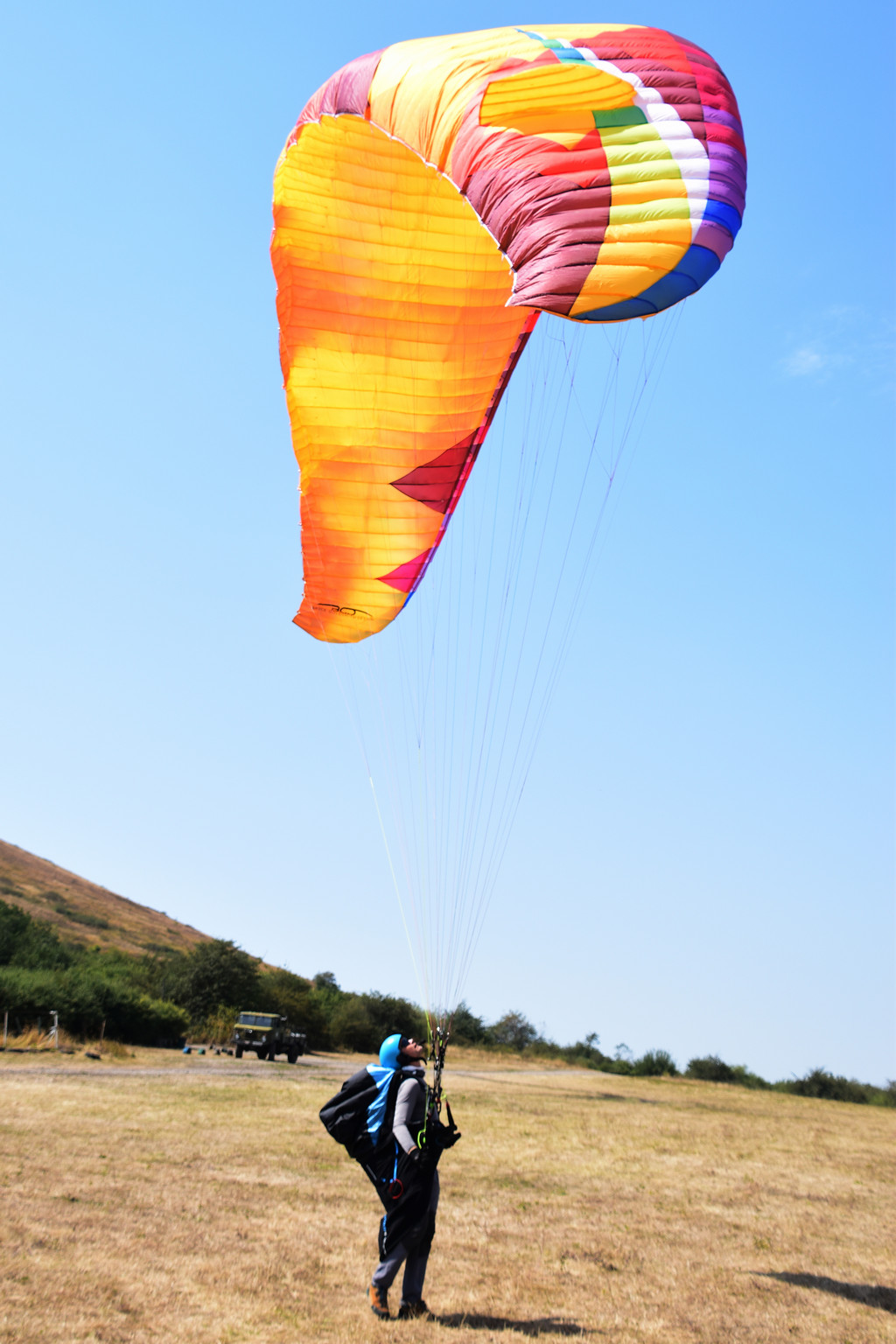
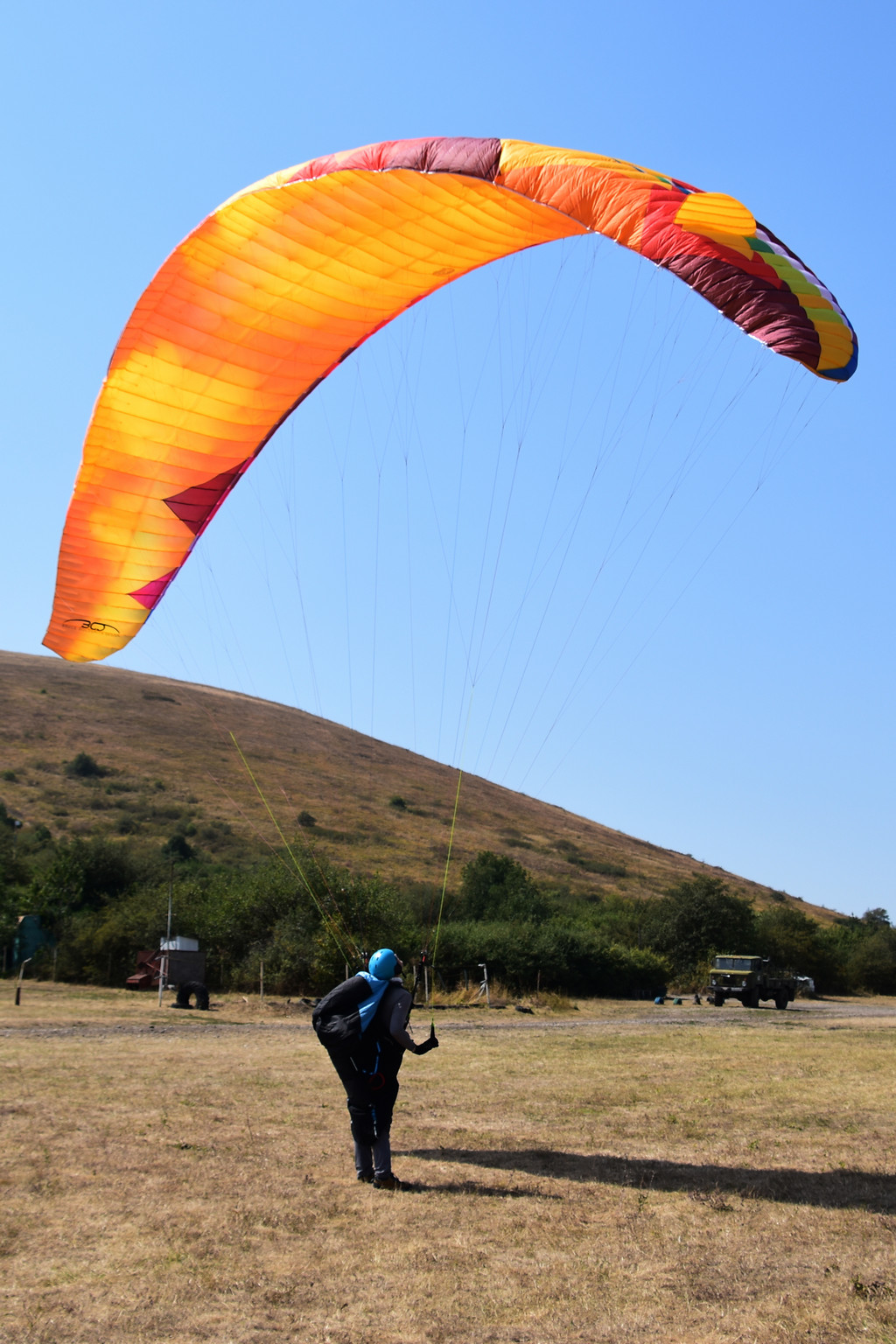
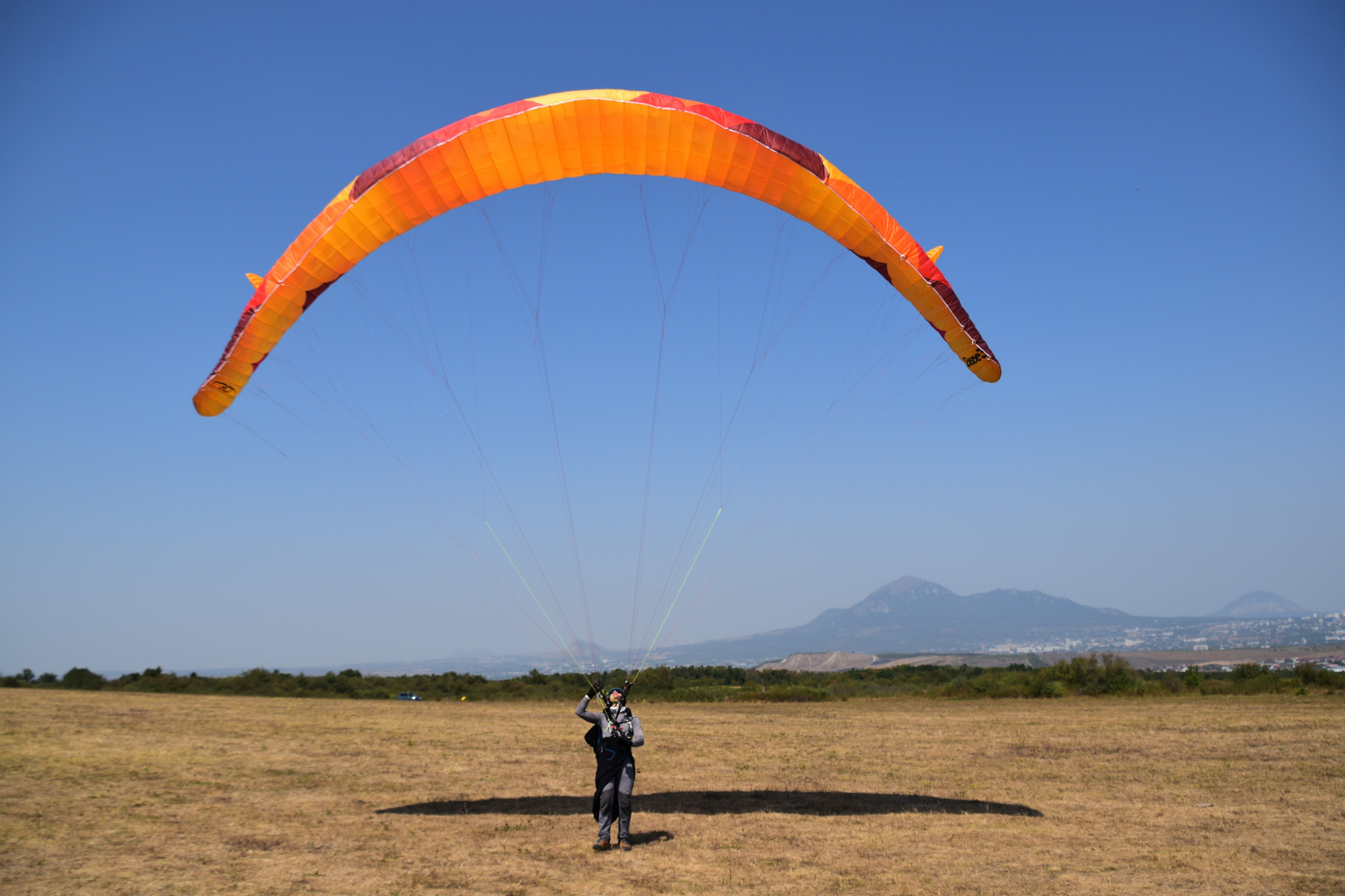
As far from boring as the Base 3 looks from the side, its groundhandling is just as boring (in the good sense of the word!). A smooth, linear, calm rise overhead with a barely noticeable tendency to hang back, forgivable for a mid EN B. Overhead the Base 3 stands rock-still, needing minimal control with the brakes. I liked its reactions to weight shift and hand inputs right away: without excess sharpness and abruptness, but quick and precise. The brakes are efficient enough, with a margin, for exercises like the "cobra" or touching the ground with an "ear". Just remember that because of the considerable weight of our test subject, such tricks become possible in winds from about 4-5 m/s. In lighter wind the Base 3 can be brought up overhead and even kept there, but "pulling" the wing out of a big roll will be impossible.
Takeoff
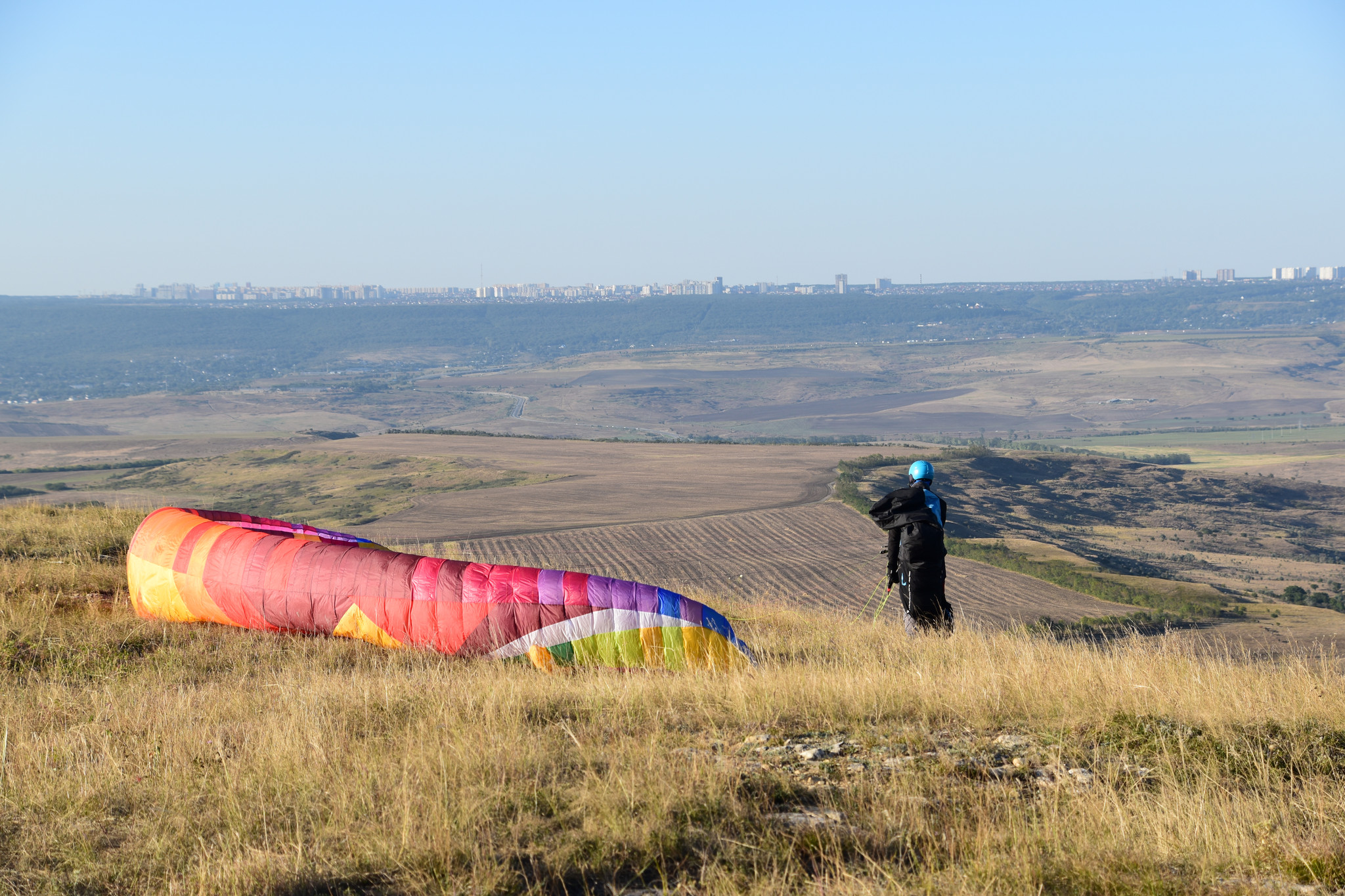
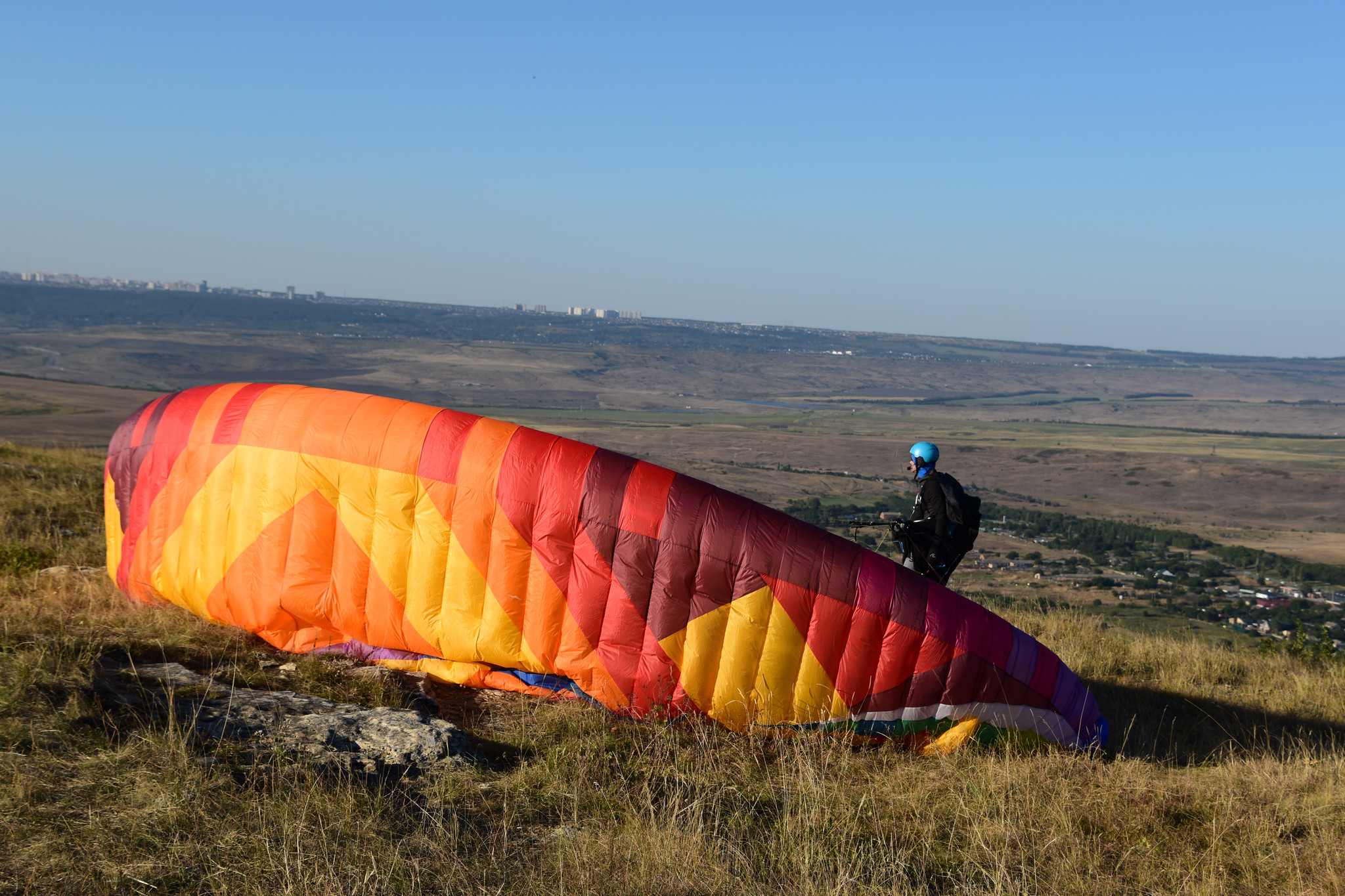
My acquaintance with the Base 3 began in very rough weather with a strong gusty wind. Conditions like that can stress anyone... except the Base 3! I didn't even notice how I took off -- it all happened so quickly and simply. Excellent!
Flight
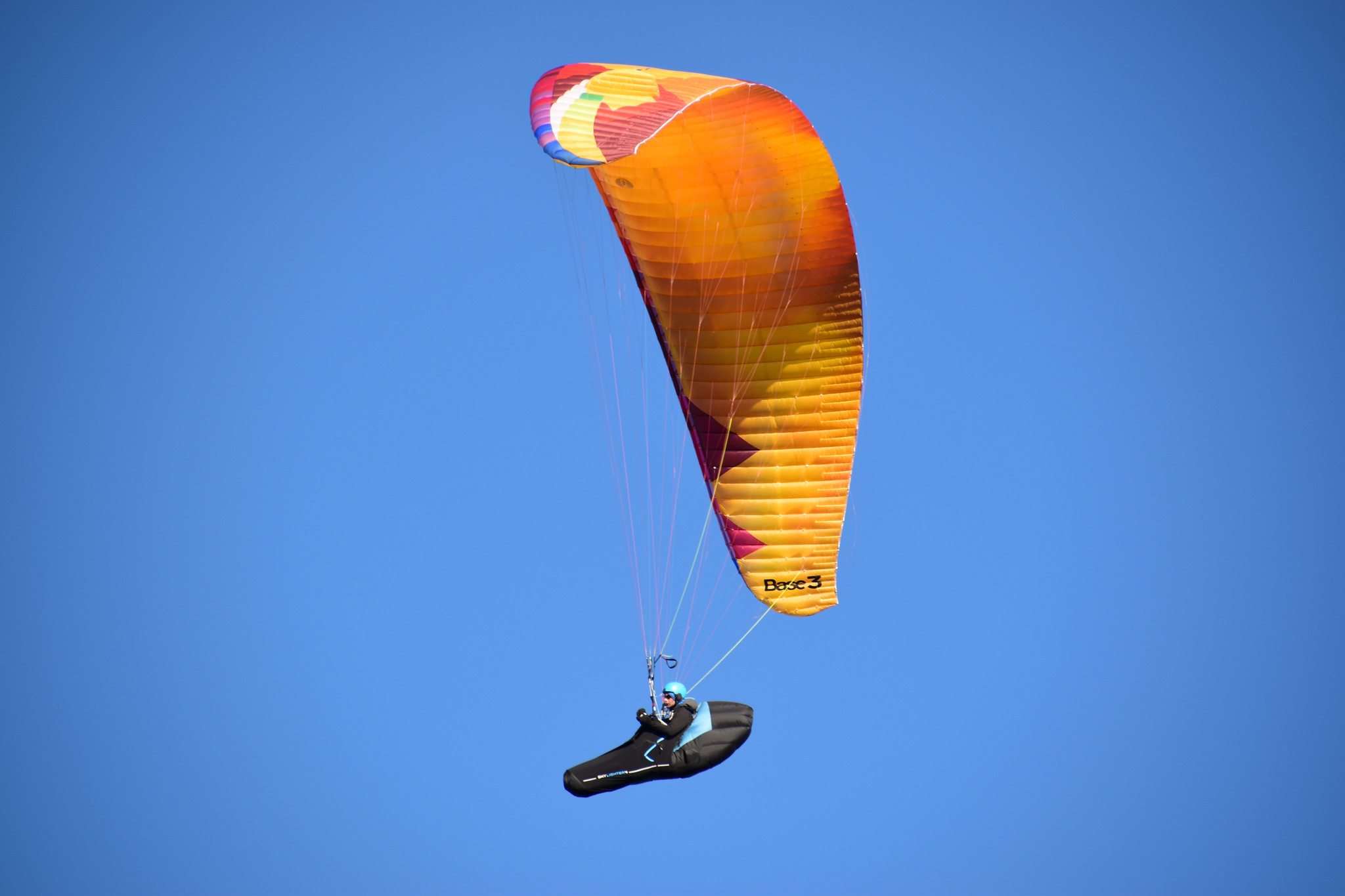
Comfort and feedback
Comfort
Feedback
Something unreal! I'm talking about comfort. The pitch damping is such that during my first flight on the Base 3 I had to judge the state of the air by... the behavior of other paragliders flying next to me. In the very first minute of the flight I got a thermal of more than +5 on the averager, which I immediately cored, feeling as if I were sitting on a sofa watching a movie about myself from the outside. In especially strong kicks or when dropping out of the lift roughly, I could sometimes feel something, but the sensations were so weak and vague that my body refused to believe them. A movie, nothing more! In roll the Base 3, as often happens with modern wings, is a bit less "calmed down" -- so much so that it can sometimes make a roll of as much as 20-30 degrees all by itself. Funnily enough, in strong turbulence there are micro-wobblings and nano-snakings... but you have to be able to notice and feel them. Overall -- I think that in terms of comfort the Base 3 sets a new bar in the EN B class!
A few words about the so-called "reflex" (self-stable profile) and how it is done on the Base 3. Self-stable wing profiles give more stability in pitch. Simply put, the wing doesn't tend to jump back and forth. Typical self-stable profiles have the rear part of the chord turned up. When you pull the brakes, such a profile turns from self-stable into an ordinary one, unstable in pitch. Trying to stop a surge by simply pulling the brakes, we get an unexpected and unpleasant effect: the wing may go forward even more willingly! Testing the Base 3, I was very afraid of this effect -- and was very glad not to find it. The self-stability of the Base 3 profile is achieved by a special shape of the lower part of the profile, while its top is quite traditional, without a turned-up "tail", and so the Base 3 responds to the brakes in a familiar, clear and adequate way.
OK, but what about feedback? For the Base 3 this is a very tricky question. To be honest, in the first minutes of flying the Base 3, despite the rough and powerful weather, I felt "disconnected" from the wing. A really puzzling feeling! Where is the lift? How do I turn in it? And have I centered it well just now, or what?.. At first it was difficult, and being unused to it, it even scared me a little. I had to fly practically "blind", relying more on experience than on the almost absent feedback from the wing. I had to turn my senses up to the maximum, and only then did some mutual understanding begin between me and the Base 3. The feedback of the Base 3 turned out to be quite classic, the "language" of this wing is simple and clear. The only problem is that the Base 3 "talks" to the pilot in a whisper, sparingly dropping a couple of short phrases a minute. I had to orient myself mainly by changes in airspeed -- probably one of the most pronounced "data channels" of the Base 3. After about half an hour of flying, I unexpectedly discovered the "special two-liner magic", present in homeopathic doses. Yes, yes, exactly that -- even though our hero is a three- (well OK, OK, two-and-a-half-) liner. At the far periphery of a thermal the Base 3 barely noticeably bends its path towards the core. The effect is weak, but it is definitely there! On entering a thermal the Base 3 tends, like some two-liner Niviuks, to briefly "dive forward", but this effect is also very weak, you have to be able to feel it. Overall, in my opinion, there is little feedback even by EN B standards.
High speed flying
I made my first flights on the Base 3 without a properly working Prandtl-Pitot sensor. But even without any Pitot it was very noticeable that the Base 3 picks up a lot of speed on the speed bar. I had to tinker with the instruments, and a couple of days later I was able to make proper, honest measurements. The results are impressive! +16...+18 km/h over trim speed. And trim speed, it must be said, is fairly high on our hero, a couple of km/h above the class average. As a result, the top speed (IAS) of the Base 3 is close to 60 km/h! At the time of writing this test report, I can remember only one EN B wing that showed such impressive speeds: the Axis Comet 2. But that was a long time ago, and as of 2025 there seem to be no competitors to our test subject in terms of speed. Excellent!
Turn ability
Unexpectedly excellent! And not without peculiarities. The old Icepeak 6 immediately came to mind, which tended to go into steep turns and big rolls with deceptive smoothness. About the same happens with the Base 3. No abruptness in the reactions to hands and body even when loaded at the top of the weight range, everything happens softly and comfortably for the pilot -- and at the same time the Base 3 gets into a big roll on the count of one! Roll control, and turning in general, are surprisingly simple and clear on this wing, without complex transitions and without having to hold the wing in the regime set by the pilot. Whoosh -- and the Base 3 is already standing in a 45-degree roll. Period! Surprising behavior for such a damped wing. Usually wings that behave calmly in turbulence handle noticeably worse. Base's wonderful turn came in very handy in strong narrow thermals. The glider sits in them beautifully, without trying to fall out to the periphery of the lift or, on the contrary, to drop into a steep spiral, resembling not Niviuks anymore, but some of the Advances. Very unusual -- and very, very cool! The wingovers impressed me too, which the Base 3 does, as they say, on the count of one. A skilled pilot can put the Base 3 into a 120-degree roll in literally a couple of moves!
Glide
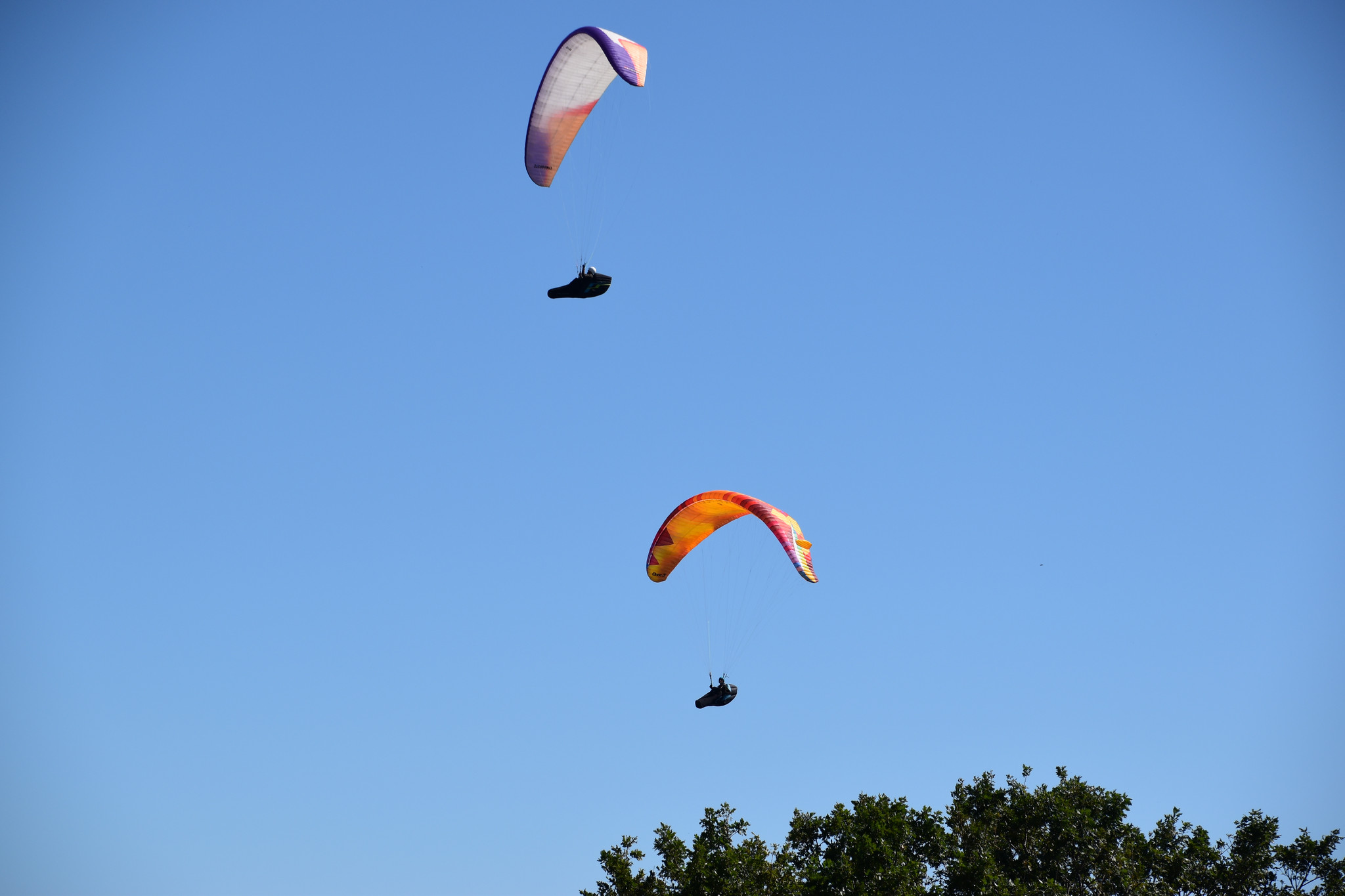
The hardest quality to measure and probably the one pilots care about most, even in the EN B class. Nevertheless, I dare to state with confidence that the Base 3 is very good in this respect too. I flew side by side with several different wings of different times and classes -- and it turned out that the Base 3 flies comparably to not too old wings proudly bearing the EN C label. Impressive! With EN B wings, even relatively modern ones, there is no real competition -- on glides the Base 3 quickly and convincingly climbs above them.
Soaring and sink rate
You won't believe it -- also very good, if not excellent! The Base 3 gives a feeling of confidence in the climb that is rare for a mid EN B, "holds on" firmly even to weak thermals and doesn't tend to increase its sink rate much when you put it into a roll. In straight flight, to reach the minimum sink rate, the Base 3 should be slowed down a little with the brakes, but in spirals our hero behaves about like wings one or two classes higher, without needing to be "choked" much. It's quite enough to hold the wing a little with the outer hand. Overall, the climb rate is at the level of a low or even mid EN C.
Dangerous flight regimes
Asymmetric collapse
Within normal limits for EN B, or even better. The effort on the A row is moderate, it's not too hard to break the leading edge. The collapse develops quickly, its span and chordwise depth are easy to control by the travel and speed of pulling the A row. Depending on the span of the collapsed part of the wing, there are two possible scenarios of recovery. A smooth and gradual reopening is typical for collapses up to 50% of the span, and if more than half the wing is collapsed -- the reopening can be a bang, very dynamic. In the second case the Base 3 tends to fairly abrupt evolutions on exiting the regime, but the amplitude of all its movements is small and well within EN requirements. Altitude loss and turn angle are insignificant in all cases -- less than 10 meters and less than 90 degrees respectively.
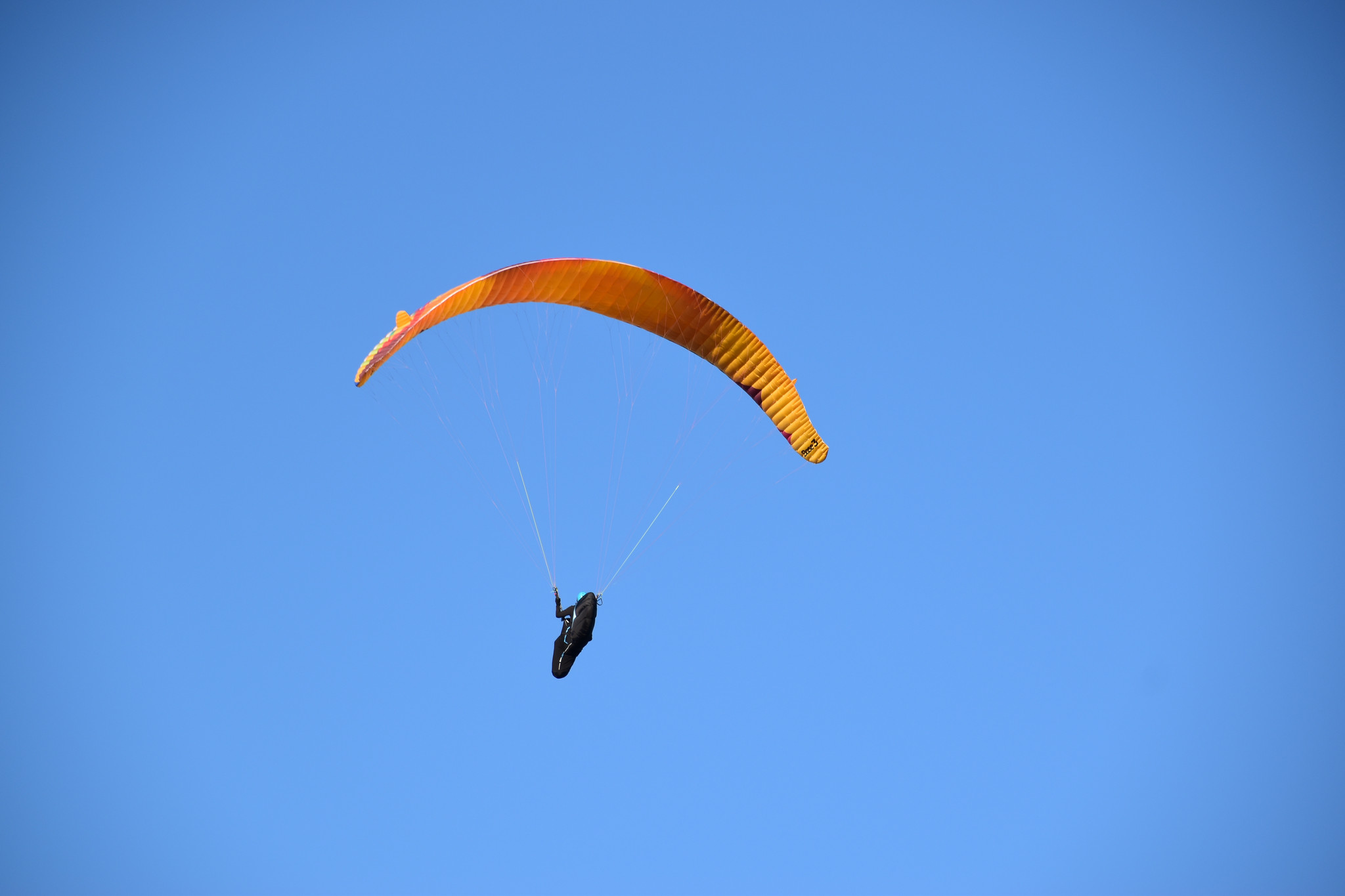
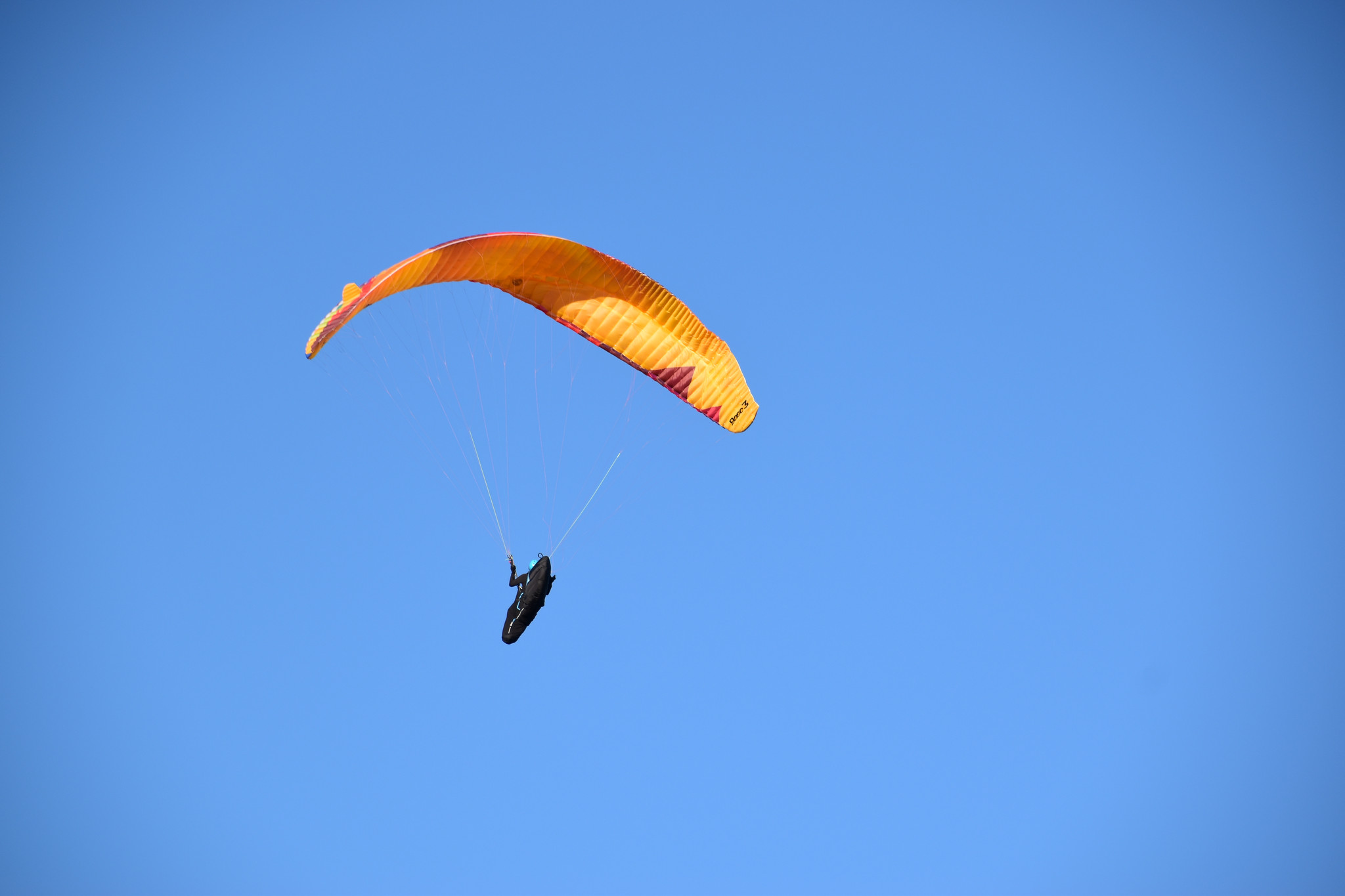
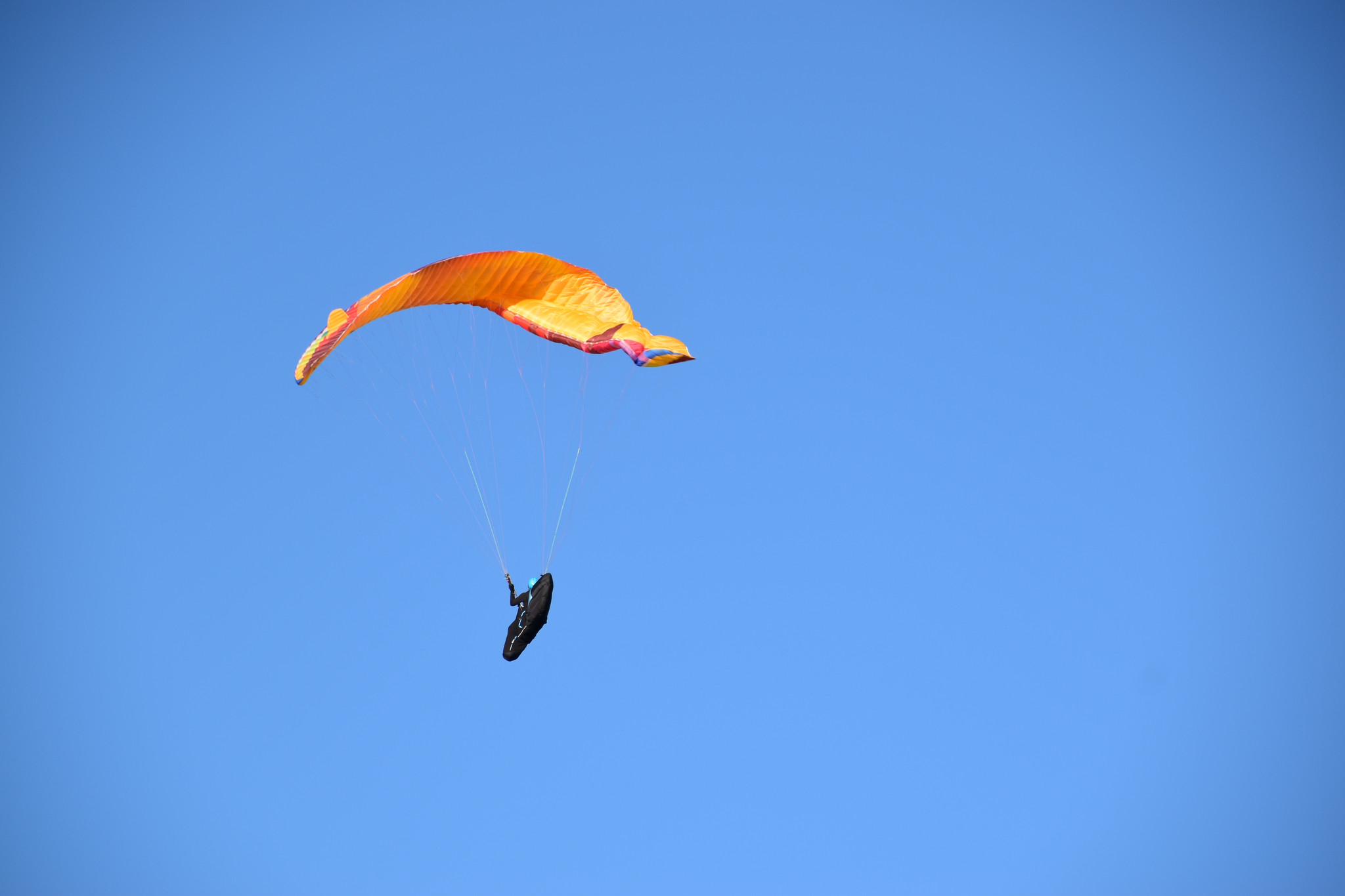
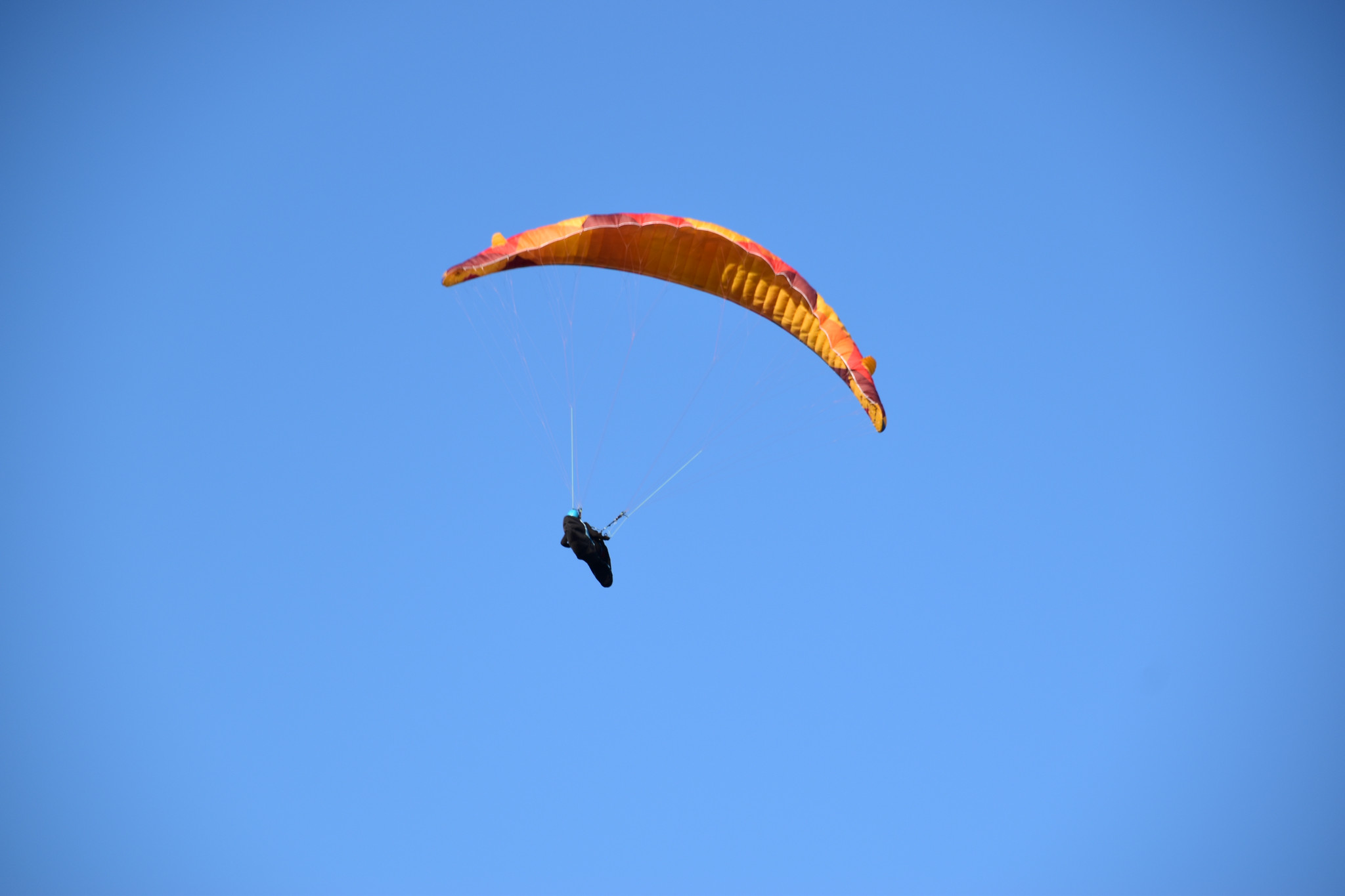
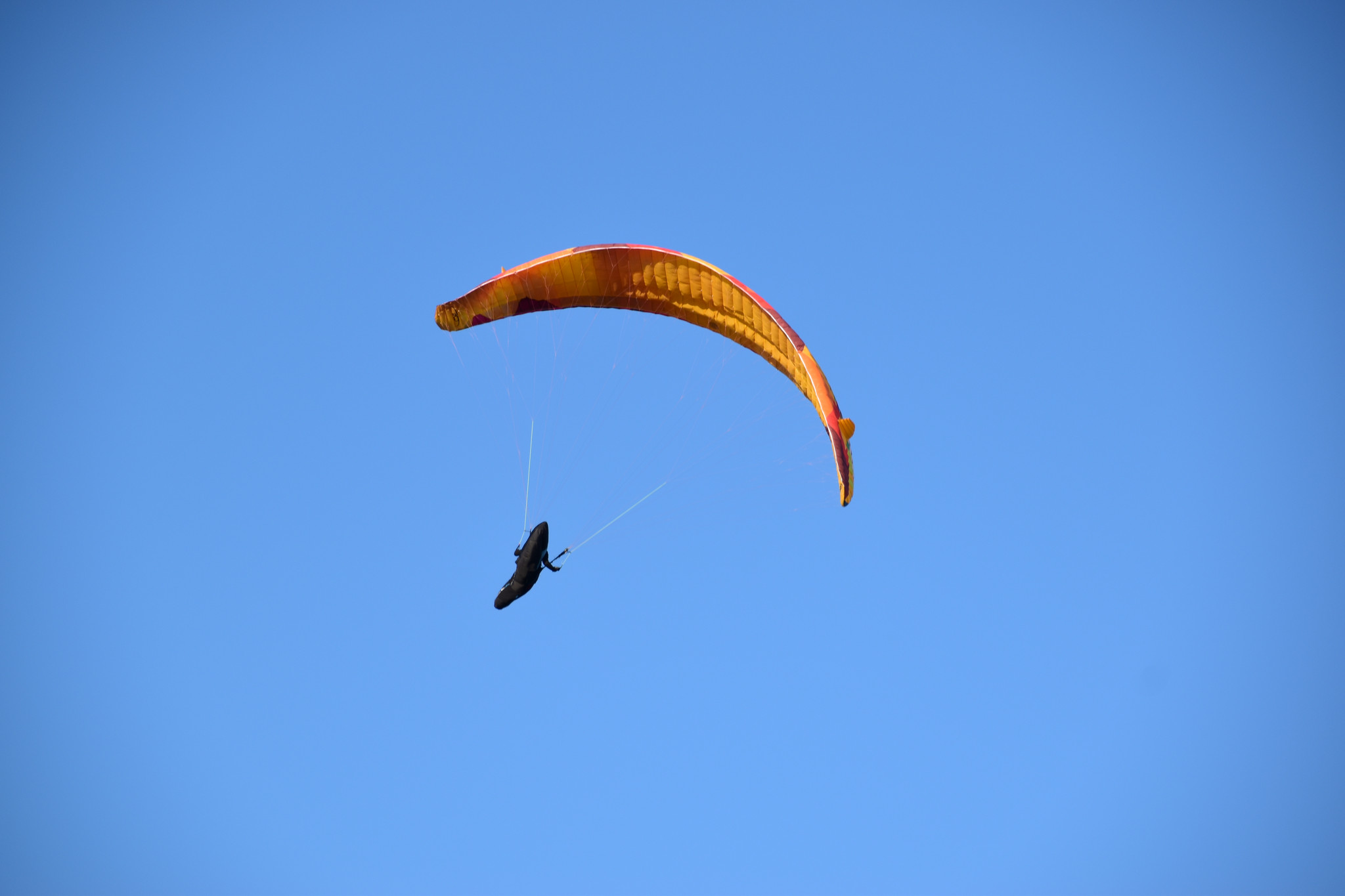
High speed asymmetric collapse
I tried different combinations of collapse span and speed bar travel. Overall -- excellent: the reopenings are quick, with a bang, the glider rolls, but the collapse reopens quickly, without significant turning or altitude loss. But I did manage to find something unpleasant too. Asymmetric collapses of about 40% of the span at about 50% of the speed bar travel very likely lead to small but unpleasant "cravats", which are better opened with a spin.
Frontal collapse
I liked it a bit less than the "asymmetrics", but everything is within normal limits. The collapse develops deep along the chord, the "ears" go far back. The recovery is smooth and soft, without pronounced surges and oscillations, but somewhat slow. Altitude loss -- about 15 meters.
Tip stall
Somewhat unusual, but without problems. The unusual part is that a considerable part of the span, almost half the wing, gets involved in the stall at once. But the stalled "ear" still bends back noticeably, giving the pilot a clear signal that the stall has started. The regime develops smoothly, the wing immediately loses a lot of speed, and there is a pronounced slip towards the stalled side. The exit is quick, with a short but energetic surge and small wobblings.
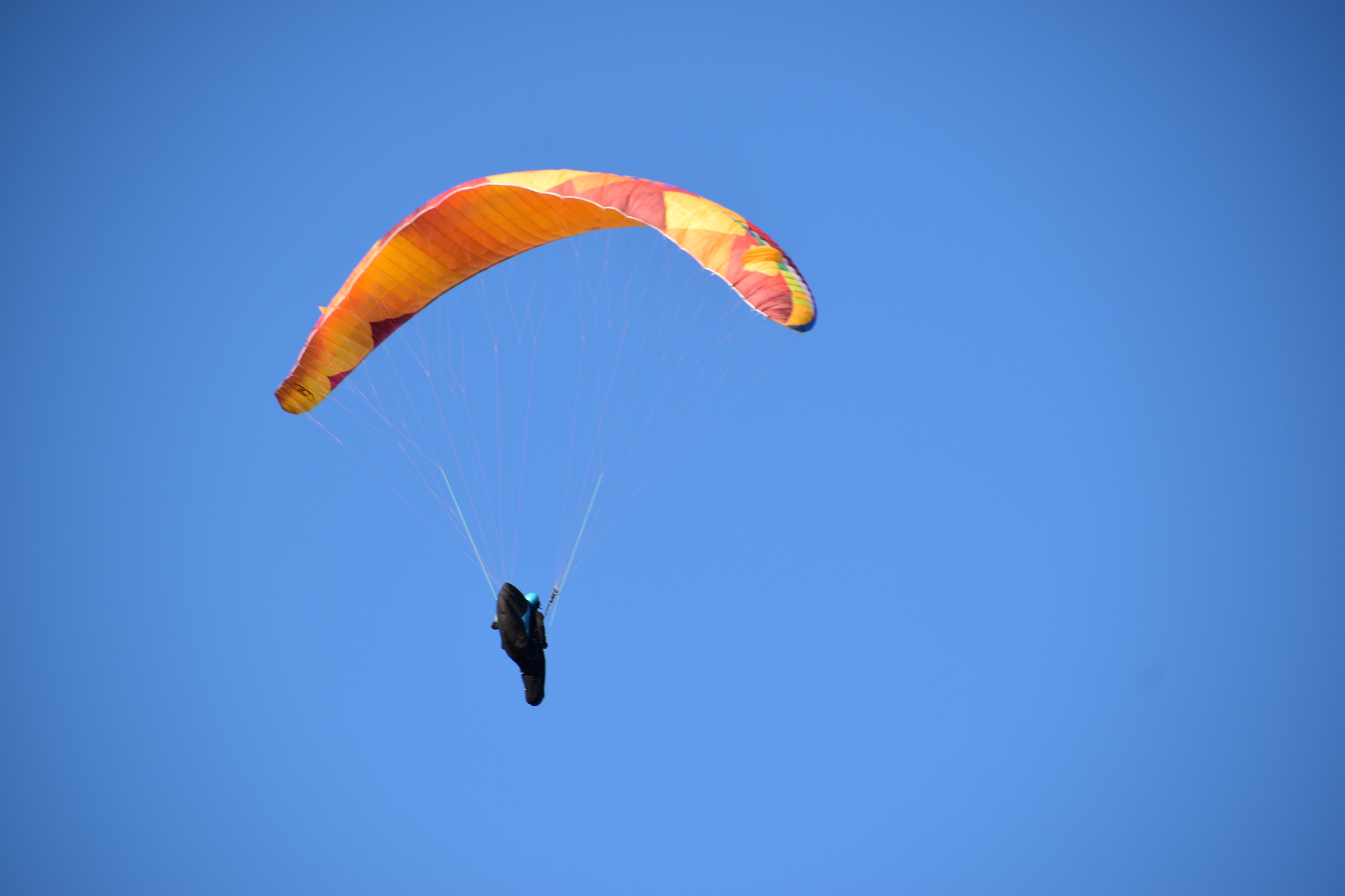
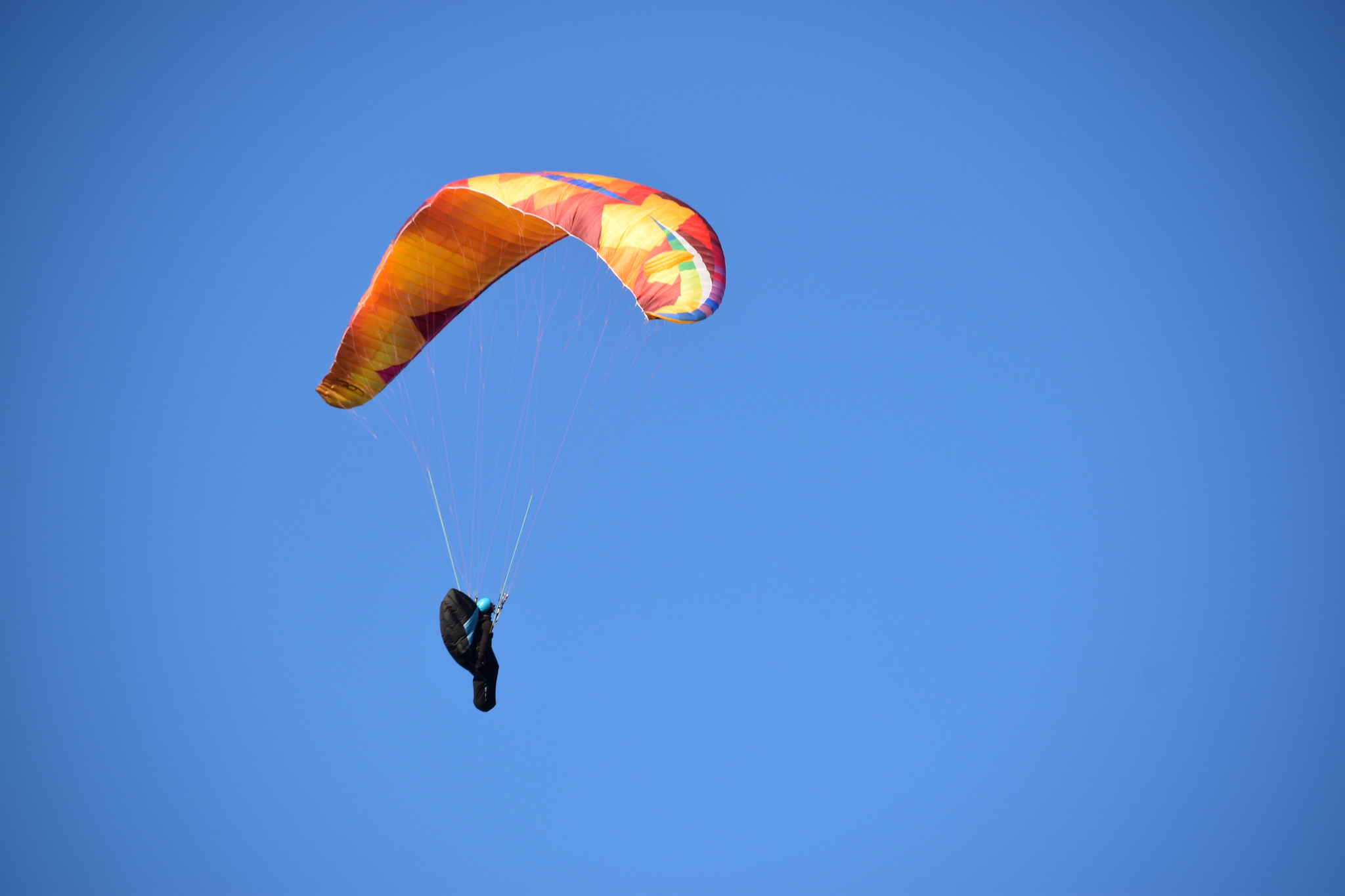
Quick descent techniques
Ears
Textbook! They fold softly, with moderate effort, and are very stable. When the outer A lines are released, they reopen slowly, but by themselves. The sink rate is not very high, around -3 m/s.
Looks like BGD deserves congratulations! In my opinion, the Base 3 is a landmark wing that sets new standards in the EN B class. As of 2025, I don't know of a single EN B wing able to compete with the Base 3 as a whole. Moreover -- even in single criteria it is very hard to compete with this wing. Great performance, excellent maneuverability, the highest comfort, high passive safety... A combination of the incompatible, no less paradoxical than the looks of our test subject. By 2025 standards -- very much an acquired taste! But given all its other virtues, that is easy to forgive.
Where does it fit?.. A kind of universal soldier that will be good at everything and everywhere. Almost everywhere -- except the mountains. The heavy construction and the considerable packing volume don't allow the Base 3 to be considered a hike-and-fly wing. But for that discipline BGD has a lightweight Base 3 with the unexpected name Breeze. Then again, if a big heavy backpack is no obstacle to mountain flying, the Base 3 will be good in the mountains too.
I estimate the minimum required airtime at about 20 hours. Talented pilots with good motor skills could probably even use the Base 3 for their initial training.
Pros
- Excellent performance
- Very high top speed
- High maneuverability
- Extremely calm, friendly character
Peculiarities
- Low feedback
Thanks
I would like to thank Alexey Grenkov for providing the wing for the tests.
Copyright
- Photo: I. Tarasova, A. Tarasov
Technical data
| Flat area, sq. m. | 24.4 |
|---|---|
| Flat A.R. | 5.7 |
| Flat span, m | 11.8 |
| Projected area, sq. m. | 20.6 |
| Cells, total | 57 |
| Cord max, m | 2.7 |
| Takeoff weight, kg | 75-95 |
| Glider weight, kg | 5.3 |
| Size | M |
Materials and components
| Manufacturer | Material | |
|---|---|---|
| Upper surface, leading edge | Porcher | Skytex 38g/m² |
| Upper surface except leading edge | Porcher | Skytex 38g/m² |
| Bottom surface | Porcher | Eazyfly 40g/m² |
| Ribs, supported | Porcher | Skytex hard finish 40g/m² |
| Ribs, unsupported | Porcher | Skytex hard finish 40g/m² |
| Diagonal ribs | Porcher | Skytex hard finish 40g/m² |
| Lines, upper cascades | Edelrid | Magix Pro Dry 8001U |
| Lines, middle cascades | Edelrid | Magix Pro Dry 8001U |
| Lines, main (lower) cascades | Edelrid | Magix Pro Dry 8001U |
| Lines, brakes | Liros | DSL |